

If you’re looking to create and sell online courses, choosing the right platform is key. This guide explores 10 platforms tailored for different needs, ranging from beginners to advanced educators. Here’s a quick summary:
- Udemy: Global marketplace with 57M students. Free to upload, revenue share model (37% organic, 97% instructor-promoted sales).
- Coursera: Partner with universities or companies. Ideal for academic and professional certifications.
- Teachable: All-in-one platform for hosting, marketing, and selling courses. Starts at ₹2,450/month.
- Kajabi: Premium business solution with advanced marketing tools. Starts at ₹4,575/month.
- Skillshare: Subscription-based platform for short, project-based courses.
- Graphy: Indian-focused platform with INR payment support and branded websites. Starts at ₹2,500/month.
- LearnDash: WordPress plugin for full control over courses. Starts at ₹12,500/year.
- Thinkific: Cloud-based platform with a free plan and flexible pricing options.
- Podia: Unified dashboard for courses, memberships, and digital products. Starts at ₹3,250/month.
- YouTube: Free platform for reaching a global audience and promoting premium courses.
Quick Comparison
| Platform | Type | Starting Price | Transaction Fees | Best For |
|---|---|---|---|---|
| Udemy | Marketplace | Free | 37% organic, 97% promo sales | Beginners, tech courses |
| Coursera | Academic Marketplace | Free | Partnership-based | Academic certifications |
| Teachable | All-in-one | ₹2,450/month | 0% (paid plans) | Growing educators |
| Kajabi | All-in-one | ₹4,575/month | 0% | Advanced creators |
| Skillshare | Subscription-based | Free | Revenue share | Creative professionals |
| Graphy | Self-hosted | ₹2,500/month | 0% (paid plans) | Indian educators |
| LearnDash | WordPress LMS | ₹12,500/year | Hosting fees | Custom solutions |
| Thinkific | Self-hosted | Free plan available | 0% (paid plans) | Small-medium creators |
| Podia | All-in-one | ₹3,250/month | 5% (Mover plan) | Digital product creators |
| YouTube | Video Platform | Free | 45% ad revenue | Free education, marketing |
Each platform caters to specific needs. Beginners may prefer Udemy or YouTube for their low entry barriers. Experienced creators might lean toward Teachable or Kajabi for more control and revenue potential. For Indian educators, Graphy offers local payment support and regional focus.
Start by evaluating your goals, audience, and budget to pick the platform that aligns with your teaching journey.
The Best Online Course Platforms Compared (2025)
Types of Online Course Platforms
Choosing the right type of online course platform is a key step in shaping your teaching journey.
Each type comes with its own perks and challenges, and understanding these can help you make an informed decision that aligns with your goals as an educator.
Marketplace platforms are like bustling online bazaars, offering instant access to a large pool of students.
They come with a built-in audience, making it easier to get started.
However, the platform typically takes a significant share of your revenue, and you’ll face tough competition from other instructors offering similar courses.
To stand out, your content needs to shine. If you’re looking for more control over your course business, other options might be more suitable.
On the other hand, self-hosted platforms give you full control over your courses.
Tools like LearnDash let you create and sell courses directly from your own website.
This means you can set your pricing, manage your branding, and handle student data, with only basic payment processing fees to consider.
The downside? You’ll be responsible for everything – from marketing to technical maintenance and student support.
For those seeking a balance between control and ease, all-in-one platforms might be the answer.
Platforms like Teachable and Kajabi offer tools for creating courses while also providing built-in marketing features like email systems and sales pages.
They take care of hosting and security as well.
These platforms usually charge a subscription fee along with transaction costs, making them a great choice for educators who want more control than a marketplace offers but don’t want the full responsibility of self-hosting.
If your focus is on delivering structured and detailed educational experiences, LMS-focused platforms are worth considering.
These systems are designed for in-depth learning, offering features like progress tracking, assessment tools, and student management.
They’re particularly suited for professional training, certification programs, or multi-module courses that require advanced analytics and customized learning paths.
| Platform Type | Revenue Share | Audience | Control Level | Best For |
|---|---|---|---|---|
| Marketplace | Platform takes a significant share | Built-in large audience | Low | Beginners, quick content testing |
| Self-hosted | You keep most revenue (minus fees) | Build your own audience | Complete | Experienced educators |
| All-in-one | Subscription + transaction fees | Build your own audience | High | Growing educators |
| LMS-focused | Varies | Build your own audience | Complete | Professional training programs |
Your choice of platform depends largely on where you are in your teaching journey and your long-term goals.
For many Indian educators, starting with a marketplace platform can be a practical way to test their content and generate initial income.
Over time, as they build their brand and audience, transitioning to self-hosted or all-in-one platforms often becomes the next logical step.
1. Udemy
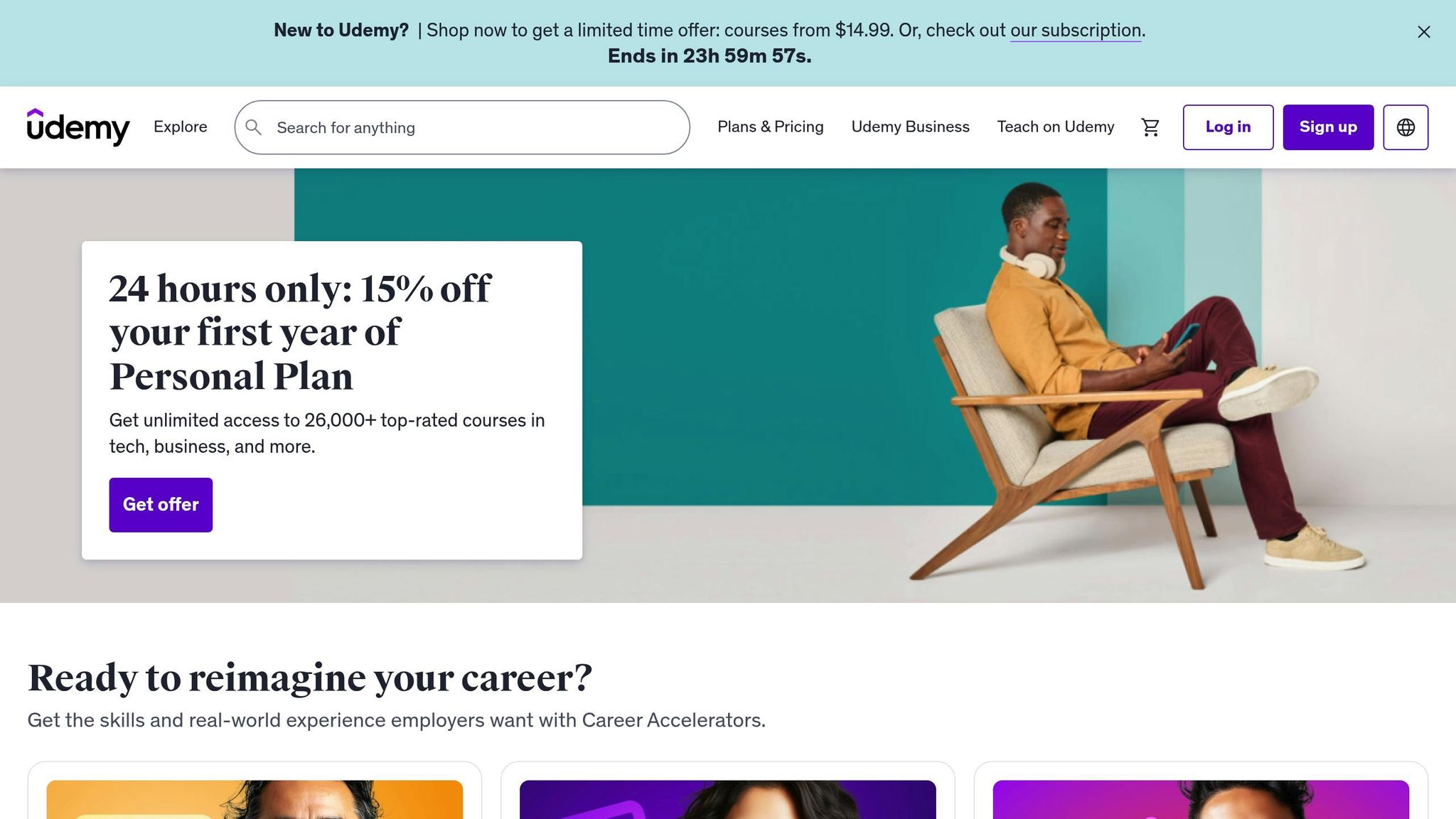
Udemy, recognised as the world’s largest online course marketplace, connects 57 million students with over 213,000 courses available in 75+ languages.
For Indian educators, this platform offers unparalleled global reach.
Platform Type
Udemy operates as a marketplace where your courses are listed alongside thousands of others.
While the competition is fierce, the platform’s massive global audience provides instant visibility.
Udemy takes care of technical aspects like video hosting and payment processing, leaving you free to focus on creating quality content.
Pricing Structure
Udemy’s revenue-sharing model is straightforward but varies based on how students find your course:
- If students discover your course organically through Udemy, you receive 37% of the revenue.
- If students enrol using your promotional links or instructor coupons, you keep 97% of the revenue.
There are no upfront costs or subscription fees to use the platform – you can create and publish courses at no charge.
Udemy frequently runs promotions, offering courses for as low as ₹455 to ₹910.
While these discounted rates might seem worrying, many instructors find that bulk sales at lower prices often result in higher overall earnings compared to fewer sales at higher prices.
Course Creation Features
Udemy provides a comprehensive toolkit for creating courses in various formats.
You can upload unlimited video content, making it ideal for in-depth courses.
Supported formats include video lectures, downloadable resources, quizzes, coding exercises, and assignments.
The platform’s video player comes with features like speed control, closed captions, and note-taking options.
You can organize your course into sections and lectures, allowing students to track their progress easily.
Additionally, Udemy automatically generates completion certificates, which is a big draw for students looking to add credentials to their resumes.
For Indian educators specializing in technical subjects, Udemy’s support for coding exercises and practice tests is particularly advantageous.
Monetization Options
Udemy offers several ways to increase your earnings.
You can use course bundles, promotional coupons, and the platform’s affiliate programme to attract more students.
The affiliate programme enables other instructors and external partners to promote your courses for a commission, expanding your reach without requiring extra marketing efforts.
Moreover, Udemy’s subscription service, Udemy Business, provides another revenue stream. Companies pay for employee access to curated courses, and if your course is included, you earn based on student engagement and completion rates.
Payment Processing
Udemy simplifies payment processing by supporting a variety of methods, including credit cards, debit cards, PayPal, and mobile payments.
For Indian instructors, payments are processed in INR and over 190 other currencies, ensuring global accessibility.
You’ll receive payouts monthly, provided your earnings exceed $50 (approximately ₹4,150).
Payments can be made via PayPal,Payoneer, or direct bank transfer.
Udemy also handles tax documentation and provides detailed revenue reports to assist with accounting.
Student Experience
Students can access Udemy courses through web browsers and mobile apps for iOS and Android.
The mobile apps allow offline viewing, enabling learners to download lectures and study without an internet connection – an essential feature for students in areas with inconsistent connectivity.
Each course includes discussion forums where students can ask questions and engage with instructors and peers. Additionally, students can rate and review courses, which directly impacts your course’s visibility and reputation on the platform.
Udemy’s progress tracking system ensures students know exactly where they left off and how much of the course they’ve completed. These features encourage higher engagement and course completion rates, contributing to an effective learning experience.
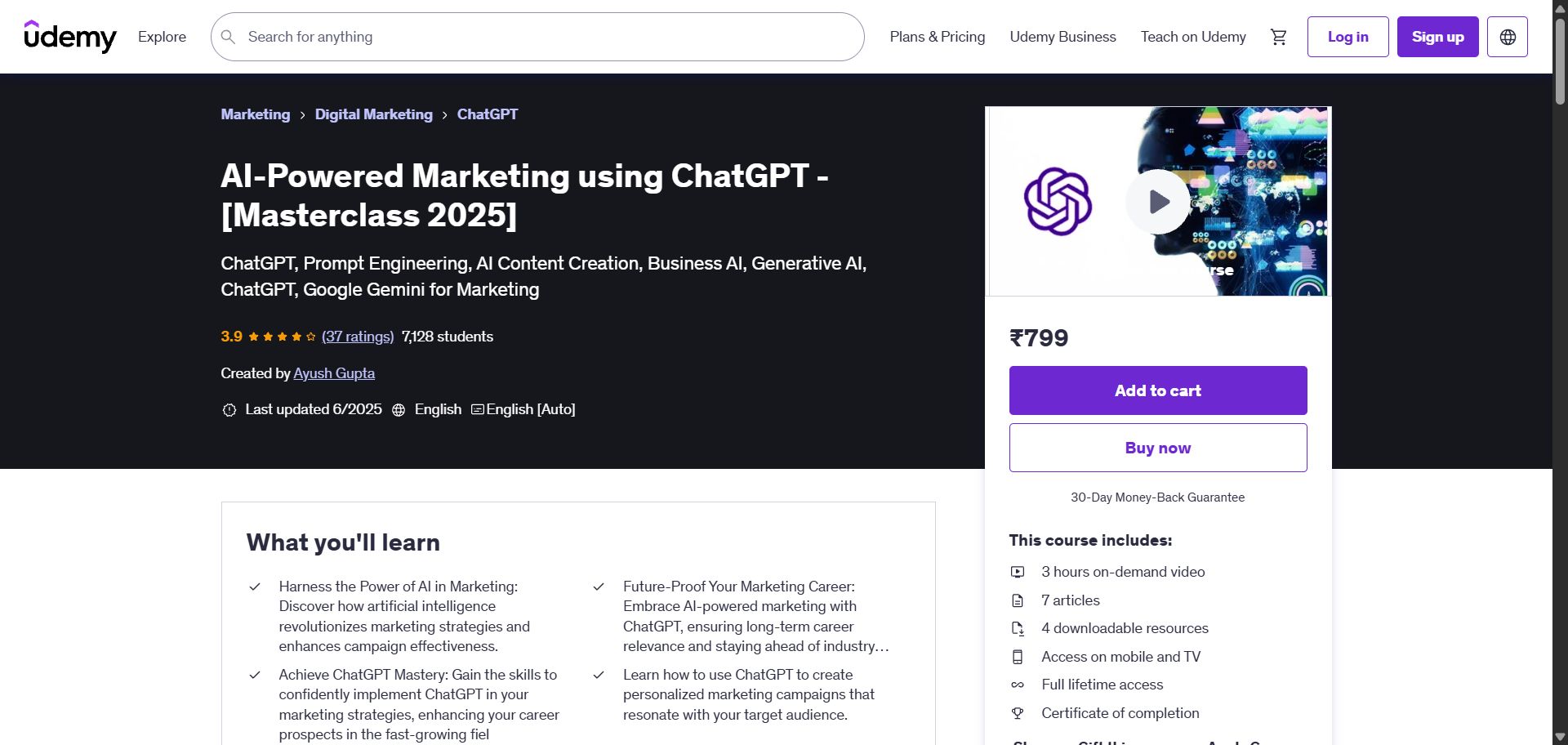
I launched my own course about “AI-Powered Digital Marketing using ChatGPT” on Udemy.
2. Coursera
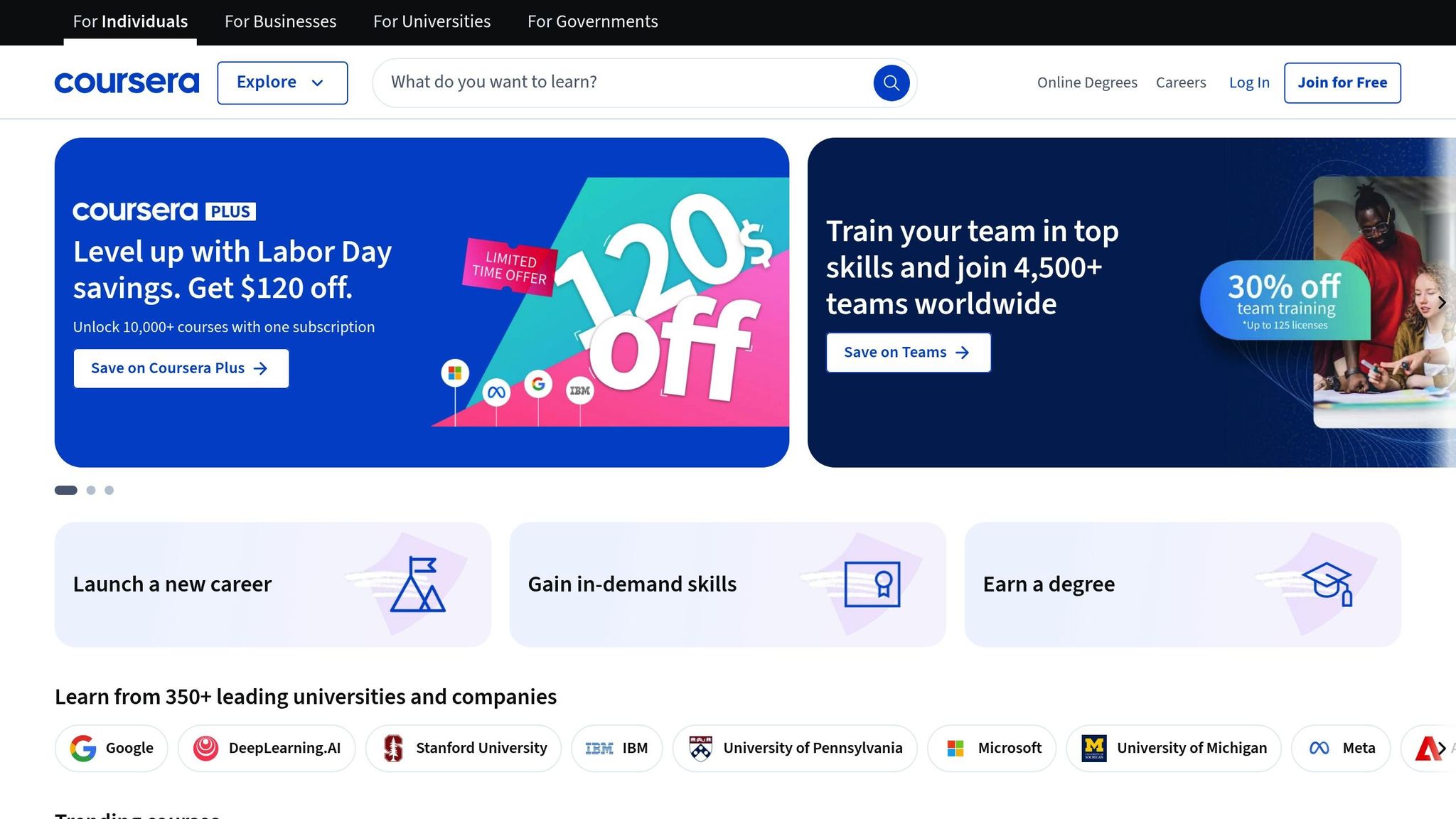
Coursera has established itself as a top-notch platform for university-level online education, collaborating with esteemed institutions and global companies like Stanford, Yale, Google, and IBM.
With its expansive international reach, it offers Indian educators a chance to partner with prestigious organisations and connect with a global academic audience.
Platform Type
Coursera operates differently from traditional course marketplaces; it functions as an academic partnership platform.
It also provides opportunities for subject matter experts through initiatives like Coursera for Business and Guided Projects.
The platform focuses on structured learning paths, specialization tracks, and even full degree programs.
This makes it particularly suited for educators with solid academic backgrounds or professional expertise in sought-after fields. Its structured academic framework sets it apart from other platforms mentioned earlier.
Pricing Structure
Coursera’s pricing model is distinct.
While learners can audit courses for free, accessing graded assignments and earning certificates requires payment.
The platform primarily uses a subscription-based model, with revenue-sharing terms determined by partnership agreements.
Additionally, subscription plans offering access to multiple courses increase the platform’s earning potential and accessibility for students.
Course Creation Features
Coursera upholds stringent academic standards for its course content.
Courses typically include a mix of video lectures, supplementary texts, interactive quizzes, and assignments – some of which involve peer reviews.
Educators are expected to create clear syllabi with well-defined learning objectives.
The platform supports high-quality video hosting and incorporates accessibility features like closed captions to ensure inclusivity for a global audience.
An integrated peer assessment system helps maintain content quality while easing the workload for instructors.
Many courses also provide verified certificates and, in some cases, options for academic credit in collaboration with partner institutions.
This rigorous setup appeals to educators aiming to build credibility and attract dedicated learners.
Monetization Options
Coursera offers multiple ways for educators to earn.
Specialisation programs, which bundle several courses into a cohesive learning path, are priced to reflect their added value.
Professional certificate programs, often tailored for career-focused learners, also provide a lucrative opportunity.
The Coursera for Business initiative expands revenue streams by catering to corporate training needs, while partnered degree programs offer long-term earning potential through comprehensive academic offerings.
Payment Processing
Coursera simplifies payment processing for its global user base.
It supports various payment methods, including credit cards, debit cards, and PayPal.
Indian educators benefit from payments processed in INR as well as major international currencies.
The platform ensures regular payouts, making the financial process smooth and reliable.
Student Experience
With mobile apps available for both iOS and Android, Coursera ensures students can continue learning even offline by downloading course content – ideal for low-bandwidth settings.
The platform also fosters community interaction through discussion forums, study groups, and networking opportunities.
Features like detailed progress tracking, personalized learning recommendations, and course completion indicators help students stay on track and motivated.
Additionally, certificates with verification options enhance professional credibility, making the learning experience both rewarding and practical.
3. Teachable
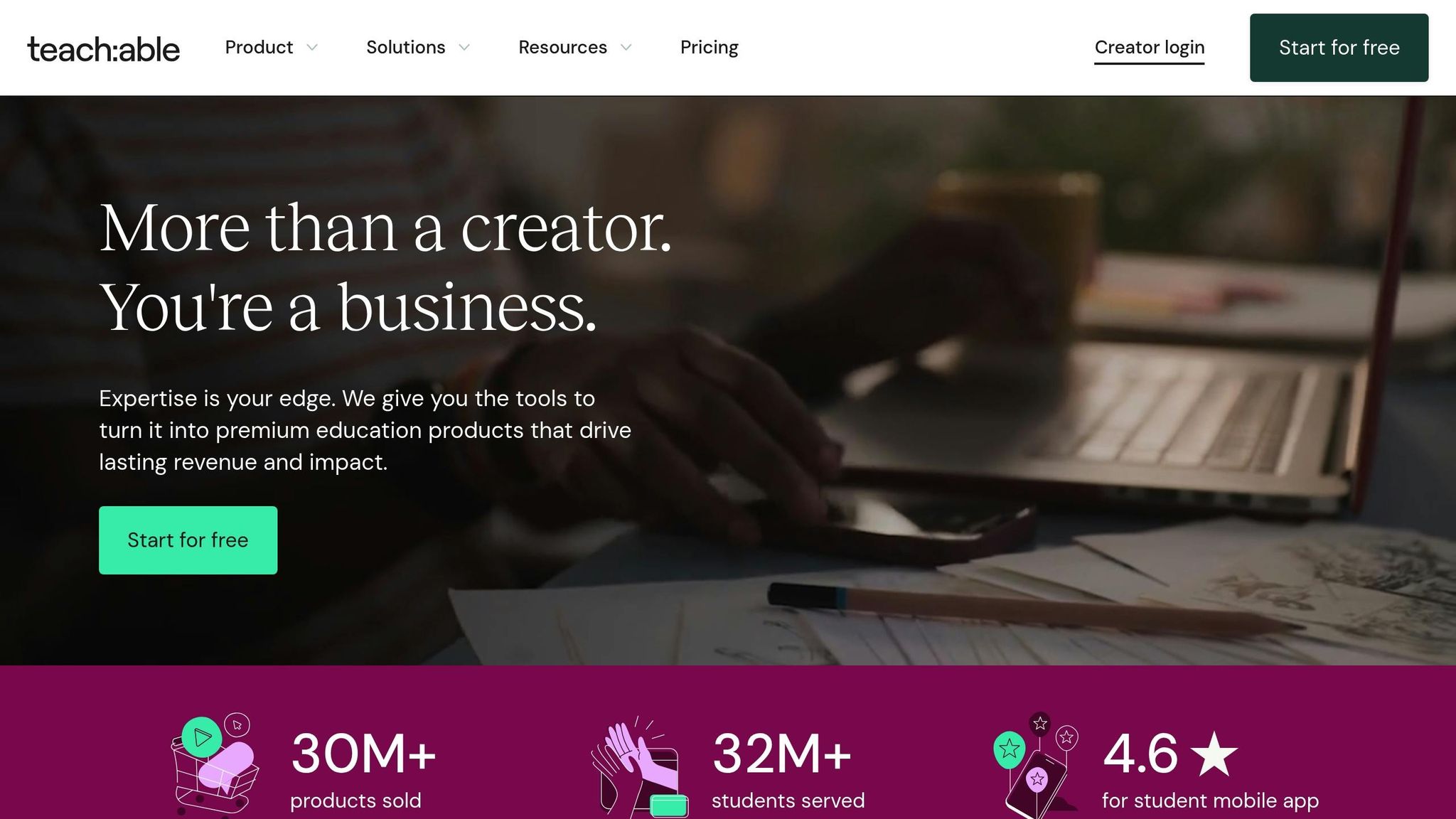
Teachable is a standout choice among all-in-one platforms, offering a user-friendly interface and powerful tools for creating and selling courses.
It’s designed to help instructors, influencers, and creative professionals launch their courses and coaching services without dealing with technical complexities.
By streamlining the process, Teachable allows educators to focus on creating quality content and growing their revenue, aligning perfectly with the guide’s monetisation goals.
Platform Type
Teachable is an all-in-one solution that combines course creation, marketing, and payment processing into a single platform.
It’s especially suited for new course creators, coaches, solopreneurs, and creative professionals who want to launch simple video courses or integrated coaching programmes.
Whether you’re building your first course or pre-selling content, Teachable provides the tools you need to get started.
Pricing Structure
Teachable offers several pricing plans to meet the needs of creators at different stages of their journey:
- Free Plan: Create one course with unlimited students, but includes Teachable branding and a 10% transaction fee.
- Basic Plan: ₹2,450/month (billed annually) with a 5% transaction fee and no Teachable branding.
- Pro Plan: ₹8,165/month with 0% transaction fees and advanced marketing features.
- Pro+ Plan: ₹16,330/month, offering priority support and advanced analytics.
For Indian educators, the platform supports INR payments and allows payouts in your preferred currency.
The transparent fee structure makes it easy to estimate potential earnings.
Course Creation Features
Teachable provides unlimited video hosting on all plans and supports various content formats, including videos, PDFs, audio files, and text-based lessons.
It also includes tools like a built-in quiz maker for assessments and automated certificates for course completion.
Key features include:
- Drip content scheduling: Release lessons over time to keep students engaged.
- Course compliance tools: Track student progress and ensure completion.
- Drag-and-drop course builder: Makes organizing content simple and intuitive.
- Integrated video player: Offers multiple playback speeds and note-taking functionality.
Monetization Options
Teachable supports multiple pricing models, such as one-time payments, payment plans, and subscription-based courses. Instructors can also:
- Bundle courses for added value.
- Offer promotional coupons with percentage or fixed discounts.
- Set up affiliate programmes to expand their reach.
The platform enables pre-orders for upcoming courses and upselling through personalised course recommendations.
Advanced plans include integrations with email marketing tools and sales page builders to boost conversions.
Marketing Features
Teachable’s marketing toolkit includes customizable sales pages, email capture forms, and basic SEO tools to help your courses get noticed.
It integrates with popular email marketing platforms like Mailchimp and ConvertKit, making it easy to automate campaigns.
Instructors can also manage affiliate programmes to recruit partners for promoting their courses.
Advanced analytics provide insights into student engagement, sales performance, and the effectiveness of marketing campaigns.
Payment Processing
Teachable handles payments through Stripe and PayPal, accepting major credit cards, debit cards, and digital wallets.
For Indian users, the platform supports UPI and net banking via integrated gateways.
Payouts are processed weekly or monthly, depending on the plan, with a minimum threshold of $25 (around ₹2,075).
Tax documentation and detailed financial reports are also provided, simplifying accounting tasks.
Student Experience
Students can access courses via Teachable’s web platform or mobile apps for iOS and Android.
The mobile apps offer offline downloads, progress tracking, and discussion forums for peer interaction.
Additional features include:
- Completion certificates.
- Course ratings and reviews.
- Personalized learning dashboards.
Students can bookmark lessons, take notes directly within the platform, and receive automated progress updates to stay motivated.
With its comprehensive set of features, Teachable empowers educators to manage their course business with ease while delivering a polished and professional experience for students.
4. Kajabi
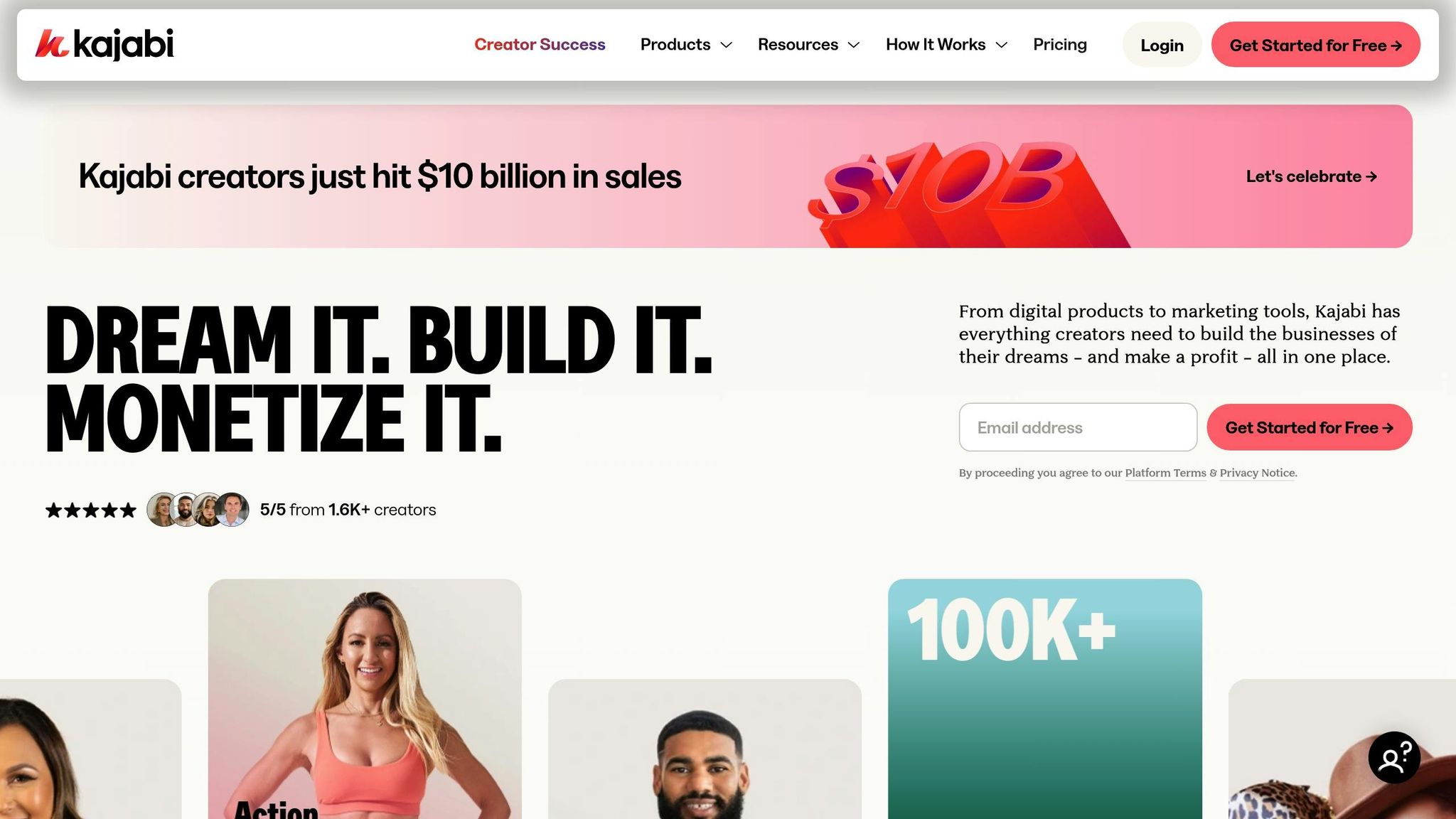
Kajabi is a premium all-in-one platform tailored for entrepreneurs and educators looking to build and expand their online businesses.
What sets Kajabi apart is its advanced automation and sales tools, making it a go-to choice for serious course creators.
Unlike simpler platforms, Kajabi provides a complete business solution, blending course creation, marketing automation, and sales management into one platform.
This makes it particularly appealing for coaches, consultants, and knowledge-based entrepreneurs aiming to scale beyond basic course offerings.
Platform Type
Kajabi is designed as an all-in-one course platform that empowers creators to automate their marketing and sales efforts.
It allows you to create a fully branded online school while maintaining complete control over pricing, student data, and customer experience.
Its standout feature is its built-in marketing automation, which includes pre-designed marketing blueprints known as "Funnels", a robust email marketing system, and an integrated CRM.
These tools eliminate the need for relying on multiple third-party solutions, streamlining your operations significantly.
Pricing Structure
Kajabi offers premium plans with no transaction fees, apart from standard payment processor charges. Here’s a breakdown of its plans:
- Kickstarter Plan: ₹4,575/month (billed annually) – 1 product, 1 funnel, 250 contacts, 50 active customers.
- Basic Plan: ₹9,915/month (billed annually) – 3 products, 3 funnels, 10,000 contacts, unlimited marketing emails.
- Growth Plan: ₹13,245/month (billed annually) – 15 products, 25,000 contacts, affiliate programme, advanced automations.
- Pro Plan: ₹26,575/month (billed annually) – 100 products, 100,000 contacts, custom code access.
Kajabi also provides a 14-day free trial (credit card required), giving users the chance to explore its features before committing.
Course Creation Features
Kajabi simplifies course creation with its Product Blueprints, which cater to a variety of digital products like mini-courses, full-scale online courses, membership sites, and community platforms.
Its use of Wistia ensures unlimited, high-quality video hosting across all plans.
The platform’s drag-and-drop course builder makes content creation intuitive, while tools like automated certificates and progress tracking enhance student engagement.
Kajabi also offers flexible assessment options, including multiple-choice, open-ended, and image-based questions.
Students can even upload PDFs, videos, and images for assignments, adding versatility to your course design.
Monetization Options
Kajabi offers multiple ways to monetize your content, catering to various business models.
You can set up one-time payments, subscriptions, payment plans, or course bundles.
Its "Funnels" feature provides pre-built marketing templates to guide customers through a seamless sales journey.
Higher-tier plans include advanced affiliate programme management, allowing you to recruit partners to promote your courses.
Additional tools for upselling, cross-selling, and automated email sequences help convert leads into paying customers, maximising revenue potential.
Marketing Features
Kajabi’s marketing automation tools rival even dedicated email marketing platforms.
With 59% of marketers citing email as their top ROI generator, Kajabi’s native email tools stand out.
They include visual editors, advanced automation workflows, and detailed analytics.
The integrated CRM tracks all interactions with prospects and customers, while pre-designed funnels support product launches, webinars, and lead magnets.
Kajabi also offers tools for custom landing pages, SEO, and even webinar hosting, ensuring a strong online presence alongside seamless payment processing.
Payment Processing
Kajabi supports payments through major processors, accommodating methods like credit cards, debit cards, and digital wallets.
While it handles multiple currencies, enabling INR may require additional gateway integrations.
Payments are processed regularly, with detailed financial reports and tax documentation provided. Importantly, Kajabi does not charge transaction fees, ensuring you retain more of your earnings.
Student Experience
Kajabi ensures a smooth learning experience for students, offering access through its branded web platform and mobile apps for iOS and Android.
The mobile apps allow offline downloads, track progress, and include community engagement tools to keep learners connected.
Features like discussion forums, direct messaging, and group interactions foster a sense of community.
Automated progress updates, completion certificates, and seamless access across devices contribute to a highly engaging and user-friendly experience.
Kajabi is a premium solution, offering enterprise-level tools for course creators serious about scaling their businesses. Its combination of advanced features and user-centric design makes it a strong contender in the online course platform space.
5. Skillshare
Skillshare is a learning platform that stands out by focusing on creative and practical skills.
Instead of traditional lectures, it emphasises hands-on, project-based learning, making it a go-to choice for artists, designers, and other creative professionals.
What sets it apart is its focus on helping students not just learn but also create tangible work that can enhance their portfolios.
Platform Type
Skillshare operates on a subscription-based model, granting members unlimited access to its entire library of courses through monthly or annual memberships.
This structure encourages a sense of community among learners and instructors, fostering deeper engagement.
Importantly, this model also influences how instructors earn, as detailed in the monetisation section.
Pricing Structure
The platform uses a revenue-sharing system based on the watch time of premium subscribers.
Instructors don’t need to pay any upfront fees, making it accessible for those just starting their teaching journey.
Additionally, Skillshare offers bonus programmes to reward instructors who create highly engaging content.
Course Creation Features
Skillshare provides user-friendly tools to help instructors create and share their courses.
Supported formats include video lessons, downloadable resources, and project briefs.
While there are no quizzes or formal certifications, the focus on projects allows students to produce real-world work.
Instructors can offer feedback on these projects, although the level of interaction varies.
Monetization Options
Instructors on Skillshare earn through a subscription-based model, with revenue tied to the watch time of their classes by premium members. Individual course pricing is not an option.
However, bonus programmes provide additional earning opportunities for those who consistently deliver engaging and impactful content.
Marketing Features
Skillshare takes care of most of the marketing, promoting classes via its homepage, email campaigns, and social media channels.
Instructors can boost their visibility by creating attention-grabbing class titles, engaging project briefs, and high-quality promotional videos.
Classes with active project galleries and positive student feedback often gain more exposure, thanks to the platform’s community-driven discovery system.
Payment Processing
Payments are handled directly by Skillshare, with instructors receiving their earnings monthly. Payment options include major credit cards, PayPal, and other digital methods.
Student Experience
Skillshare is highly rated for its user experience, boasting a 4.8 rating on the App Store.
The platform offers dedicated mobile apps for both iOS and Android, enabling offline viewing – a valuable feature for users with limited internet access.
Community interaction is encouraged through discussion boards and project sharing, though the level of engagement varies by class.
"I come to Skillshare for the curation and class quality. That’s really worth the cost of membership to me."
"I feel that it’s a safe space."
While the lack of formal assessments means students must track their own progress, the platform’s supportive environment allows learners to develop skills at their own pace.
Skillshare is an excellent choice for creative educators who value community and hands-on learning. Its unique approach makes it a standout option in the crowded world of online teaching platforms.
6. Graphy
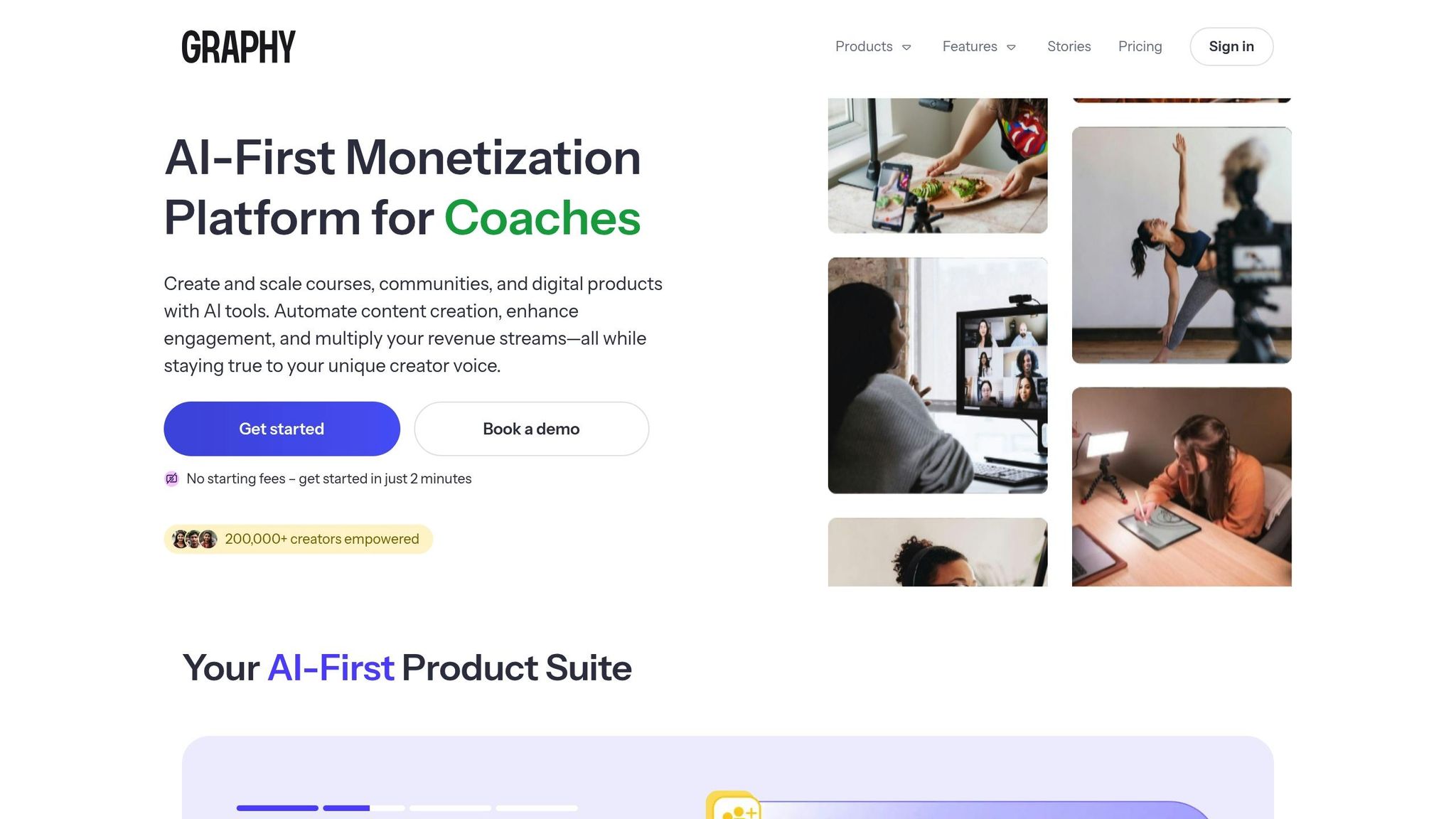
Graphy is a platform tailored specifically for Indian educators, offering a unique way to create and manage your own educational brand.
With Graphy, you can build a fully branded website, giving you complete control over your courses and student data.
This makes it an attractive choice for educators who want to establish their own identity rather than depending on external marketplaces.
Platform Type
Graphy functions as a standalone hosted platform, designed to help you create an educational website without requiring technical skills.
Its drag-and-drop website builder simplifies the process, making it accessible even if you’re not tech-savvy.
What sets Graphy apart is its focus on the Indian market, addressing local challenges faced by educators when monetizing their expertise online.
This self-branded approach is ideal for those looking for the independence of self-hosted models.
Pricing Structure
The platform allows free sign-up, enabling you to explore its features and test different course options without an upfront financial commitment.
This flexibility makes it easy to experiment with course formats and pricing strategies before fully investing in the platform.
Course Creation Features
Graphy supports various multimedia formats and ensures strong content protection.
A standout feature is its virtual classroom, which combines live interactions with pre-recorded content.
This blend enhances the learning experience and sets Graphy apart from many international platforms.
Monetisation Options
The platform offers multiple ways to monetize your courses.
You can sell individual courses, create bundles, offer subscription plans, or set up different pricing and payment options.
This flexibility allows you to cater to diverse student preferences while optimising your earnings.
Marketing Features
Graphy includes built-in marketing tools like referral codes and an affiliate marketing system.
These features make it easy to set up referral programmes and expand your audience without needing additional third-party tools.
Payment Processing
One of Graphy’s key strengths for Indian educators is its seamless integration with Indian payment gateways.
This feature simplifies the process of accepting payments from local students, offering multiple familiar payment options without depending on international services.
Student Experience
Another highlight is the ability to launch branded mobile apps on the Google Play Store, providing students with a dedicated app experience.
This is particularly valuable in India, where mobile learning is increasingly popular. Additionally, the platform supports live online classes, enabling real-time interaction and personalised guidance for students.
Graphy offers a comprehensive solution for Indian educators who want to build their own educational brand while addressing the specific needs of the local market.
It’s a platform designed to empower educators and enhance the learning experience for students.
7. LearnDash
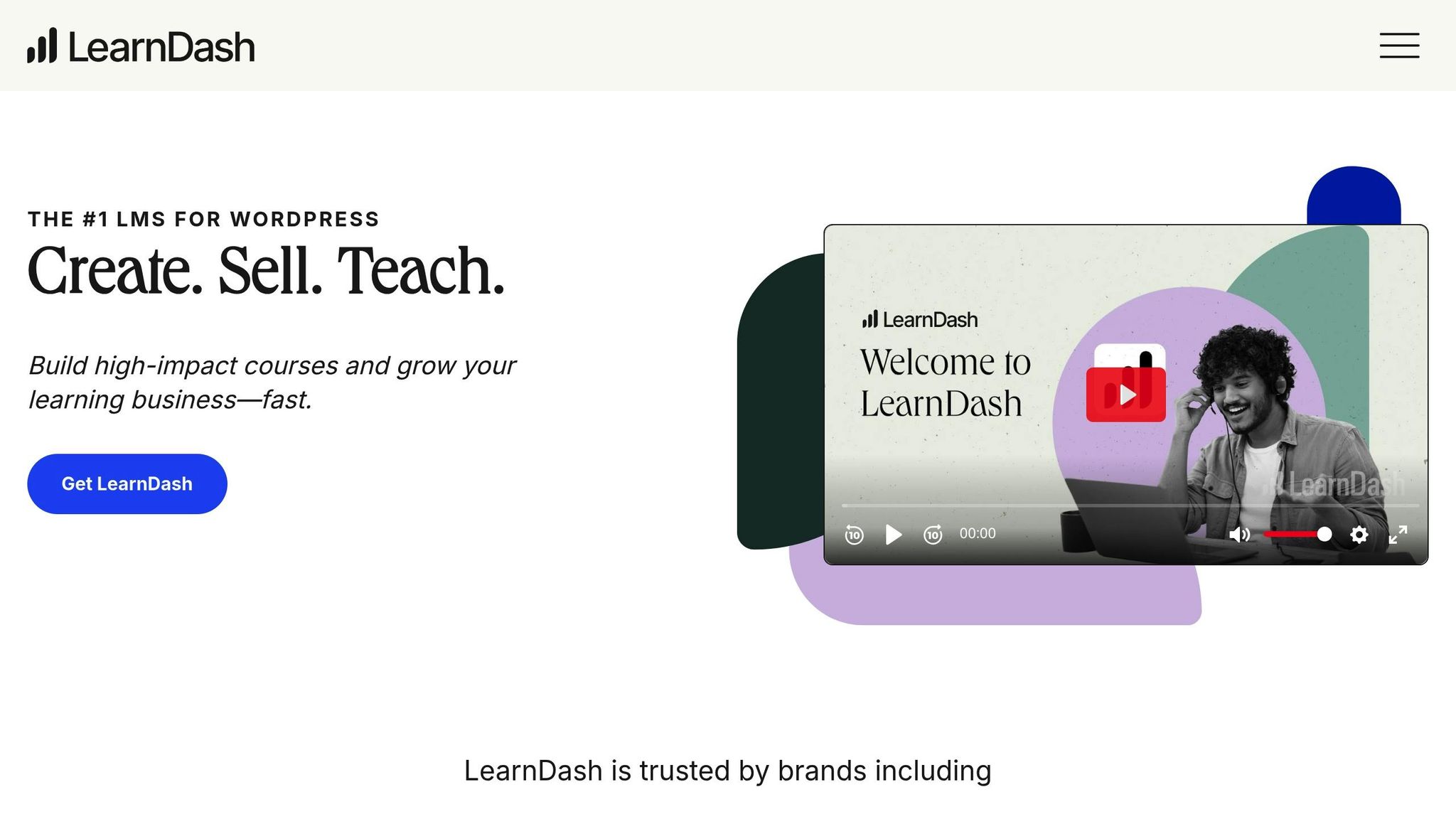
LearnDash is a WordPress learning management system (LMS) that transforms your WordPress site into a fully functional online learning hub.
Unlike marketplace platforms, LearnDash gives you complete control over your content and student data, along with extensive customization options.
This level of control is particularly advantageous for Indian educators who aim to cater to both local and global audiences.
Platform Type
LearnDash operates as a self-hosted WordPress plugin, meaning you’ll need a WordPress website to use it.
The plugin integrates effortlessly with thousands of WordPress themes and plugins, giving you endless design possibilities.
If you already have a WordPress site or blog, LearnDash becomes a seamless extension of your existing platform. This adaptability lays the groundwork for the powerful features it offers.
Pricing Structure
LearnDash follows a one-time licence model, which eliminates monthly subscription fees.
The pricing starts at ₹12,500 per year for the Basic plan (one site), ₹16,250 annually for the Plus plan (10 sites), and ₹20,000 per year for the Pro plan (unlimited sites).
This structure can be cost-effective in the long run, especially for educators planning to create multiple course websites or those who want to avoid recurring subscription costs.
Course Creation Features
LearnDash stands out with its ability to create structured learning paths.
Using its drag-and-drop course builder, you can easily organise lessons, topics, and quizzes.
The platform supports various content formats like videos, audio files, PDFs, and interactive elements. You can also schedule content releases based on timelines or student progress, ensuring a more engaging learning journey.
Additionally, prerequisites can be set to ensure students complete foundational courses before moving on to advanced topics.
Monetisation Options
Monetising courses with LearnDash is straightforward, thanks to its WooCommerceintegration.
You can sell courses individually, bundle them, or offer subscription-based access.
The platform supports one-time payments, recurring subscriptions, and even group enrollments, making it ideal for corporate training. You can also design membership tiers, offer free trials, and implement promotional strategies like early bird discounts and coupon codes. This flexibility allows educators to scale their revenue streams effectively.
Marketing Features
Being built on WordPress, LearnDash gives you access to the vast WordPress marketing ecosystem.
This includes tools like Yoast for SEO, integrations with email marketing platforms like Mailchimp, and social media sharing options.
You can also use affiliate marketing plugins to set up referral programmes.
Additionally, the platform integrates with webinar tools and works seamlessly with WordPress page builders, enabling you to create custom landing pages. These features simplify course promotion and help your brand reach a broader audience.
Payment Processing
LearnDash supports multiple payment gateways, including Razorpay, PayU, and other popular Indian processors via WooCommerce.
This ensures smooth transactions for Indian students using UPI, net banking, or digital wallets.
The platform also supports multiple currencies, allowing you to price courses differently for domestic and international markets.
Payouts follow the schedule of your chosen payment gateway.
Student Experience
Students access courses through your branded, mobile-friendly website, complete with progress tracking, certificates, and interactive forums for community engagement.
LearnDash also includes discussion forums and options for assignment submissions, fostering a collaborative learning environment.
With a user-friendly dashboard, students can easily track their progress on any device, making their learning experience smooth and enjoyable.
sbb-itb-98ad9c7
8. Thinkific
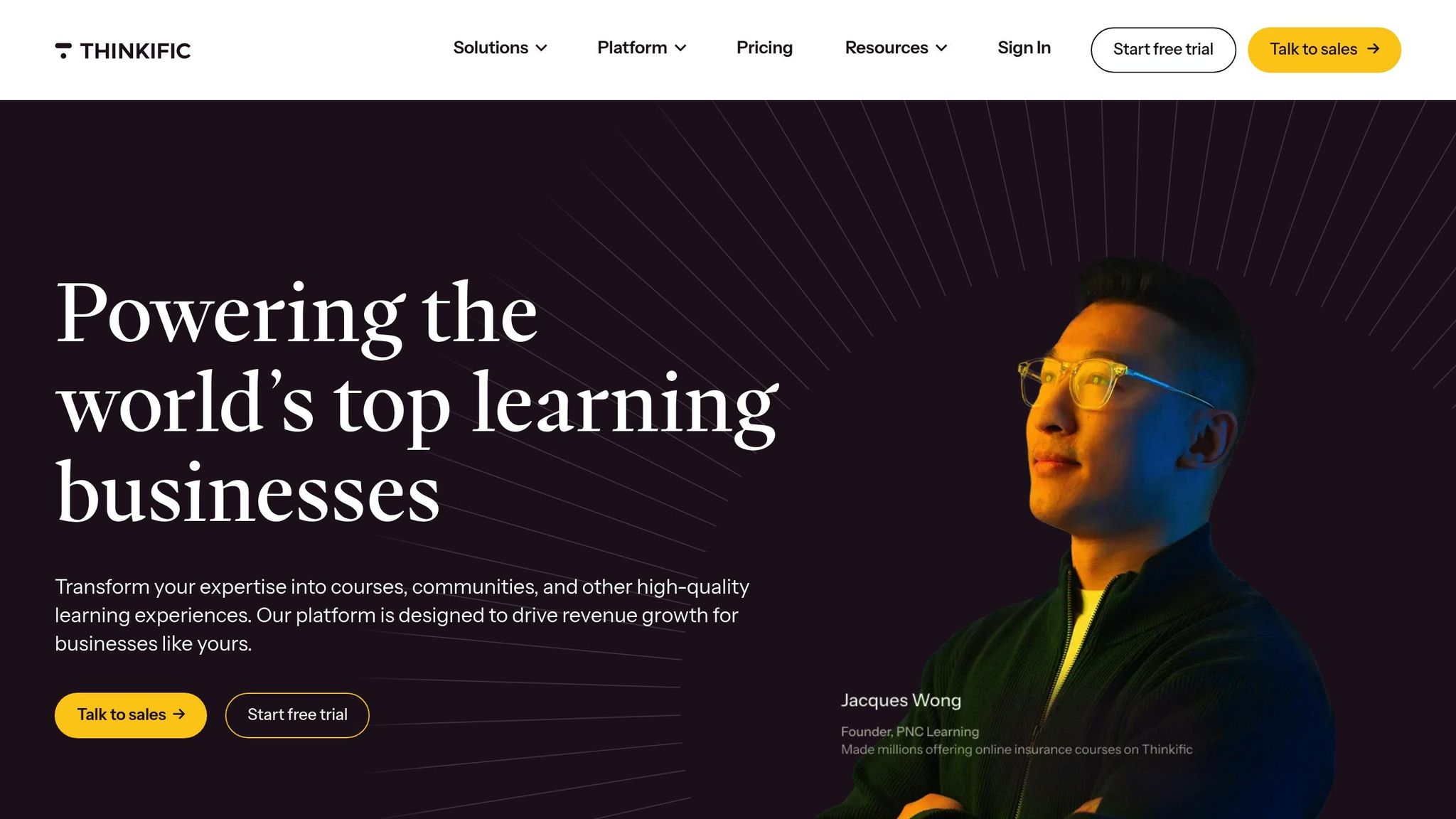
Thinkific is an all-in-one platform designed to help educators create, market, and sell online courses without worrying about technical complexities.
Unlike WordPress-based systems, Thinkific handles hosting, security, and maintenance, making it perfect for educators who want to focus on their content.
It’s a popular choice among course creators worldwide, offering a range of features for pricing, course-building, monetisation, marketing, payment processing, and student engagement.
Platform Type
Thinkific is a cloud-based platform that takes care of hosting, security, and updates, so you don’t have to.
It comes with customisable templates and an easy-to-use drag-and-drop course builder, allowing you to design professional courses in no time. Unlike self-hosted solutions, where you manage infrastructure yourself, Thinkific ensures everything runs smoothly in the background while you concentrate on creating and selling your courses.
Pricing Structure
Thinkific operates on a freemium model with various paid plans:
- Free Plan: Unlimited students and courses, but includes basic features and Thinkific branding.
- Basic Plan: At ₹3,300 per month, this plan removes branding and adds email integrations and coupon options.
- Pro Plan: Priced at ₹8,250 per month, it includes advanced features like certificates, assignments, and priority support.
- Premier Plan: For ₹41,500 per month, you get white-label solutions and advanced integrations, ideal for larger-scale operations.
This tiered pricing makes it easy for both new and established educators to choose a plan that fits their needs.
Course Creation Features
Thinkific supports a variety of multimedia formats, including unlimited video hosting, even on the free plan.
You can build lessons using videos, audio, PDFs, presentations, and text. The course builder lets you organise content into chapters and lessons, set prerequisites, and release content on a drip-feed schedule.
Additional tools include quizzes, surveys, assignment submissions, and automated certificates for course completion. These features ensure your courses are well-structured and professional.
Monetization Options
The platform offers flexible pricing models to suit different needs.
You can sell courses as one-time purchases, set up subscription-based memberships, or bundle courses together.
Payment plans allow students to pay in instalments, which is particularly helpful for Indian learners.
Thinkific also supports free courses as lead magnets, promotional coupon codes, and affiliate programmes to expand your reach.
Marketing Features
Thinkific comes equipped with tools to help you market your courses effectively. You get customizable sales pages with templates designed to boost conversions, email marketing automation, and detailed analytics to track performance.
The platform integrates with tools like Mailchimp, ConvertKit, and Zapier for seamless email campaigns and data tracking.
Webinar integrations allow you to host live course previews, while the built-in affiliate system helps you partner with others to promote your courses.
Payment Processing
Thinkific streamlines payment processing with Stripe and PayPal, accepting major credit cards and digital payment methods.
For Indian educators, this means you can effortlessly accept payments from international students.
The platform supports multiple currencies, letting you price courses for different markets. Payments are typically processed within 2–7 business days.
Student Experience
Thinkific ensures a seamless learning experience with its mobile-responsive platform, which adjusts to any device.
Students can track their progress, earn certificates upon course completion, and participate in community discussions through forums.
Features like messaging systems, assignment submissions, and interactive tools enhance engagement, creating an immersive learning environment.
9. Podia
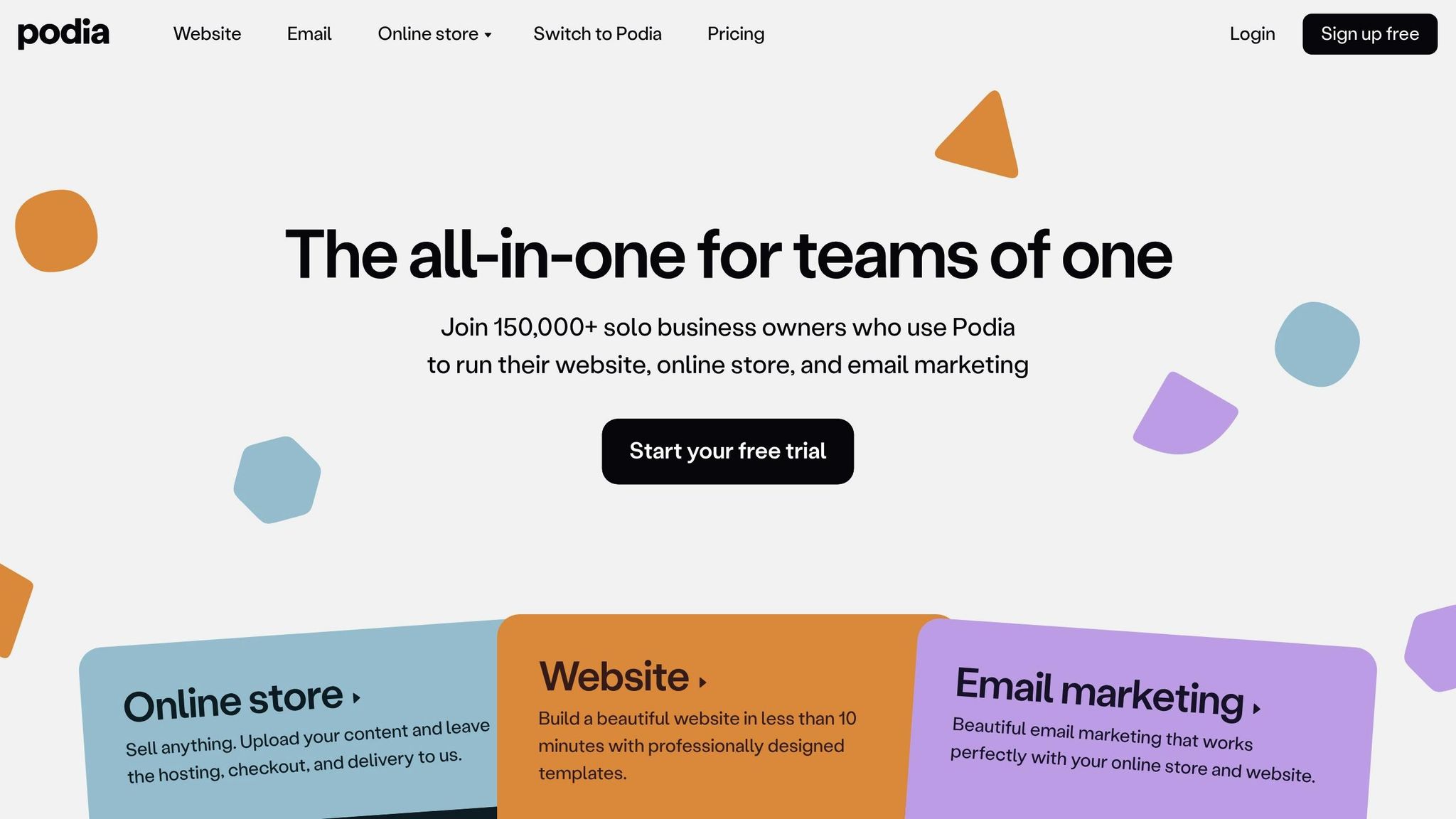
Podia is a versatile platform designed to handle course hosting, email marketing, and overall business management.
Launched in 2014 by Spencer Fry, it has grown from a simple course creation tool into a robust, all-in-one solution for managing various business needs.
For Indian educators, this streamlined approach is particularly appealing, as it eliminates the hassle of juggling multiple tools while simplifying operations.
Podia is tailored for digital entrepreneurs and solopreneurs.
With over 150,000 users worldwide relying on Podia to manage their websites, online stores, and email campaigns, it provides the flexibility to offer webinars, digital downloads, memberships, and coaching services – all in addition to traditional courses.
Platform Type
Podia functions as a cloud-based platform that combines website hosting, online store management, email marketing, and digital product sales.
Its unified dashboard is a game-changer for creators looking to simplify their workflows.
Whether you’re aiming to scale beyond one-on-one services or diversify your revenue streams, Podia makes it easier to productize your expertise and create passive income opportunities.
Pricing Structure
Podia keeps its pricing simple with two main plans:
- Mover Plan: ₹3,250 per month (₹2,750 per month when billed annually) with a 5% transaction fee. Ideal for monthly sales under ₹70,000.
- Shaker Plan: ₹7,400 per month (₹6,250 per month when billed annually) with no transaction fees. Best suited for higher revenue levels.
Both plans come with a 14-day free trial. Podia positions itself as a cost-effective alternative, potentially saving you up to ₹2,00,000 annually compared to other platforms.
This straightforward pricing structure ensures a smooth and intuitive experience for course creators.
Course Creation Features
Podia offers a user-friendly course builder that allows you to upload videos, PDFs, audio files, and text-based lessons, all with ample storage.
It also includes tools for creating quizzes, assignments, and certificates, ensuring your courses meet professional standards.
You can organize your content into modules and lessons, set prerequisites, and even schedule content releases (drip-feed) to keep learners engaged over time.
Monetization Options
Podia goes beyond standard course sales by offering various ways to earn.
You can sell courses as one-time purchases, offer subscription-based memberships, host paid webinars, provide digital downloads, and even offer coaching services.
The median course price is approximately ₹6,100, with creators earning an average of ₹16,500 per month.
Flexible pricing options, such as payment plans, promo codes, and bundles, let you cater to both domestic and international audiences with ease.
Marketing Features
Podia’s email marketing tools are highly effective, achieving open rates of up to 50%.
Features like automated welcome sequences, newsletters, and lead magnet tools help you grow and nurture your audience.
You can also build excitement for new courses using waitlists and presell options. For those on the Shaker plan, built-in SEO tools and affiliate marketing features provide an extra boost to your marketing efforts.
Payment Processing
Podia supports major credit cards, digital payments, and multiple currencies, making it easy to sell courses globally.
Payments are processed through Stripe and PayPal, allowing you to set pricing for different markets and receive payouts in your preferred currency quickly.
Student Experience
Podia ensures a smooth and engaging experience for students.
Its mobile-responsive platform works seamlessly across devices, offering features like progress tracking, completion certificates, and community tools to encourage interaction.
A built-in messaging system allows direct communication between instructors and students, adding a personal touch.
Additionally, students enjoy lifetime access to purchased content, enabling them to download resources, participate in discussions, and learn at their own pace.
10. YouTube
YouTube, the world’s largest video-sharing platform, offers educators an incredible opportunity to reach a global audience without spending a rupee.
With over 2.7 billion monthly active users worldwide, including 467 million in India, it’s a powerful tool for connecting with learners who may not have the means to access paid courses.
For many educators, YouTube serves as the perfect starting point – offering a platform to share free content while also promoting premium courses.
Take the example of Khan Academy.
Their YouTube channel has revolutionized how educational content is consumed, amassing billions of views and reshaping global learning.
For creators, the platform provides a chance to build authority, grow a following, and seamlessly transition into offering paid courses on other platforms.
Platform Type
Unlike traditional course marketplaces, YouTube operates on a free, ad-supported model.
Its advanced algorithms and social features make it easier for creators to organically reach their audience, even without spending on advertising.
YouTube is a dual-purpose platform: it’s a teaching medium for free educational material and a marketing channel for premium offerings.
Many educators use it to establish trust and showcase their expertise, encouraging viewers to explore their paid courses hosted elsewhere.
Pricing Structure
YouTube is completely free for creators – there are no fees, transaction costs, or limits on uploads.
Revenue generation begins through the YouTube Partner Programme, which requires creators to meet specific milestones: 1,000 subscribers and 4,000 watch hours, or 10 million valid public Shorts views within 90 days.
For viewers, YouTube Premium is available at ₹129 per month, offering ad-free experiences and additional perks. However, this subscription is optional and doesn’t impact the ability of creators to upload or monetize content.
Course Creation Features
YouTube supports a variety of content formats, including:
- Standard videos (up to 12 hours long)
- YouTube Shorts (60-second vertical videos)
- Live streams
- Community posts
Creators can use YouTube Studio for basic editing, but most professionals prefer external software for advanced editing before uploading.
Features like chapters, timestamps, and playlists make it easy to structure content for learners.
Additional tools, such as the community tab for announcements, live streaming for real-time interaction, and premiere features for scheduled releases, enhance the overall learning experience.
Subtitles are another standout feature.
YouTube automatically generates captions in multiple languages, broadening accessibility.
Creators can also upload custom subtitles for better accuracy.
Monetization Options
YouTube offers a variety of revenue streams for educators:
- Advertising revenue: Creators can earn ₹80-400 per 1,000 views, depending on factors like audience demographics and content type. Educational content often attracts higher rates due to its engaged audience.
- Channel memberships: Viewers can subscribe for exclusive perks like bonus content and live chat privileges, with fees starting at ₹75 per month.
- Super Chat and Super Thanks: Fans can support creators during live streams or regular videos with payments ranging from ₹20 to ₹10,000.
Many educators also use YouTube to direct their audience to premium courses hosted on other platforms – often a more lucrative strategy than relying solely on YouTube’s monetization tools.
Marketing Features
YouTube’s built-in marketing tools are a major draw for creators.
Its search algorithm can push your content to millions of viewers, often appearing in Google search results for added visibility.
This organic reach eliminates the need for paid promotion.
Creators also benefit from detailed analytics, which provide insights into audience demographics, engagement patterns, and traffic sources.
This data helps them refine their content and better understand their viewers’ preferences.
Social features like likes, comments, shares, and subscriptions encourage organic growth, while community-building tools allow educators to foster a direct connection with their audience.
Student Experience
For learners, YouTube offers a smooth and flexible experience.
Features like adjustable playback speeds (from 0.25x to 2x), automatic subtitles in multiple languages, and offline viewing (via YouTube Premium) make it highly accessible.
The platform’s recommendation system helps students discover related educational content, creating a more comprehensive learning journey.
Watch history and the Watch Later feature allow learners to keep track of their progress and organize their study schedules.
The comment section serves as a hub for discussions, enabling students to ask questions, share ideas, and learn from peers.
This interactive element enhances the overall learning experience, making YouTube a valuable tool for education.
In short, YouTube provides an unbeatable combination of zero entry costs, vast reach, and powerful tools.
It’s an excellent starting point for educators to test ideas, build an audience, and establish credibility, all while laying the groundwork for a profitable online education brand.
Platform Comparison Table
Selecting the right platform becomes a lot simpler when you can compare options side by side.
Below is a detailed breakdown of essential features and costs across 10 platforms, designed to help you decide based on your needs and budget.
This table summarises key details from earlier reviews, providing a clear overview for easy evaluation.
| Platform | Type | Starting Price | Transaction Fees | Indian Payment Support | Free Plan/Trial | Course Upload Limits | Marketing Tools | Mobile App | Best For |
|---|---|---|---|---|---|---|---|---|---|
| Udemy | Marketplace | Free to upload | 37% on organic sales, 97% on instructor-promoted sales | Yes (Razorpay, UPI) | Free uploads | Unlimited | Basic SEO, promotional tools | Yes (iOS/Android) | Beginners, tech courses |
| Coursera | Marketplace/University | Free to upload | Variable based on partnership agreements | Yes (multiple gateways) | Free course hosting | Unlimited | University branding, certificates | Yes (iOS/Android) | Academic content, professional certifications |
| Teachable | Self-hosted | ₹3,200/month | No transaction fee on paid plans | Yes (Stripe, PayPal) | 14-day free trial | Unlimited uploads on paid plans | Advanced email marketing, sales pages | Yes (iOS/Android) | High-ticket courses, course creators |
| Kajabi | All-in-one | ₹12,000/month | No transaction fee | Yes (Stripe integration) | 14-day free trial | Unlimited | Full marketing suite with funnels | Yes (iOS/Android) | Established creators, marketing-focused |
| Skillshare | Marketplace | Free to upload | Revenue sharing model | Limited | Free uploads | Unlimited | Community features, discovery | Yes (iOS/Android) | Creative courses, short-form content |
| Graphy | Self-hosted | ₹2,500/month | No transaction fee on paid plans | Yes (Indian-focused) | 14-day free trial | Unlimited uploads on paid plans | Localised marketing tools | Yes (iOS/Android) | Indian market, regional languages |
| LearnDash | LMS Plugin | ₹13,200/year | No transaction fee (requires hosting) | Yes (with WooCommerce) | No free plan | Unlimited | WordPress ecosystem, SEO | Via WordPress themes | WordPress users, custom solutions |
| Thinkific | Self-hosted | Free plan available | No transaction fee on paid plans | Yes (Stripe, PayPal) | Free plan + 30-day trial | 1 course (free), unlimited uploads (paid) | Email marketing, affiliate programmes | Yes (iOS/Android) | Small to medium creators |
| Podia | All-in-one | ₹3,200/month | No transaction fee | Yes (Stripe, PayPal) | 30-day free trial | Unlimited | Email marketing, affiliate management | Yes (iOS/Android) | Digital product creators, communities |
| YouTube | Video Platform | Free | 0% upload, 45% revenue share | Yes (AdSense) | Completely free | Unlimited | Organic reach, analytics | Yes (iOS/Android) | Content marketing, free education |
Key Insights for Choosing a Platform
Platform pricing varies widely.
For instance, YouTube is the most accessible with no upfront cost, making it ideal for educators testing ideas or building an audience.
On the other end, Kajabi charges ₹12,000 per month but offers a complete business solution with advanced marketing features.
Transaction fees also highlight different business models.
Platforms like Udemy take a significant cut – up to 97% on instructor-promoted sales – because they provide built-in traffic. In contrast, self-hosted options like Teachable and Graphy charge a monthly fee but let creators keep all their earnings, making them more appealing as you scale.
For Indian creators, payment integration is a key factor. Graphy stands out with its strong support for UPI, net banking, and other regional payment methods.
Udemy also supports Razorpay, while platforms like Kajabi rely on Stripe, which may involve higher processing fees for Indian users.
Marketing tools are another area where platforms differ.
YouTube offers organic reach through its algorithm, while Kajabi provides advanced marketing automation like email sequences and sales funnels.
Udemy, on the other hand, offers basic promotional tools but limits direct communication with students.
Ultimately, the best platform depends on your goals, budget, and audience.
Many educators use a combination of platforms – for example, starting on YouTube to grow an audience and later transitioning to premium courses on Teachable or Graphy for more control and revenue.
How to Choose the Right Platform
Before diving into course creation, take a moment to evaluate your goals, current situation, and budget.
The right platform can make or break your teaching journey, so it’s worth thinking through your needs carefully.
Below, we’ll explore strategies tailored to different educator profiles.
You can also refer to the comparison table above to align these strategies with specific platform features.
If You’re Just Starting Out, consider YouTube as your launchpad.
It’s free, easy to use, and perfect for testing your teaching skills.
Once you’ve built a small but engaged audience, you can transition your premium content to Udemy, a marketplace that attracts a built-in audience.
Udemy’s structure makes it easier to secure your first sales without needing advanced marketing know-how.
For Tech Instructors and IT Professionals, Udemy is a great choice.
Courses on programming, data science, and other tech topics tend to perform well here, thanks to the platform’s search algorithm and the high demand for practical, coding-focused tutorials.
Creative Professionals, such as those teaching design, photography, or art, might find Skillshare appealing.
Its community-driven features encourage feedback and engagement.
Once you’re ready to offer more in-depth courses, consider moving to Teachable, which supports more personalized learning experiences with project files and tailored guidance.
Experienced Educators with an established audience should look at Teachable or Kajabi.
Teachable is a cost-effective option for managing your courses, while Kajabi offers a comprehensive suite of tools for running an entire education business.
Both platforms allow you to keep all your revenue after covering monthly fees, making them ideal for creators with steady sales.
If you’re targeting the Indian market, Graphy is a solid choice. It supports local payment methods and offers language options to cater to regional audiences.
For global reach, platforms like Udemy and Teachable remain strong contenders while accommodating local payment methods.
Budget Planning Strategy
Your budget plays a crucial role in choosing the right platform.
If you’re just starting and want to minimize risk, begin with free options like YouTube or Udemy. These platforms allow you to experiment without any upfront costs.
As your income grows, you can reinvest in paid plans that offer advanced features and marketing tools.
For creators with moderate budgets, platforms like Teachable or Graphy are excellent next steps, especially as you expand your course offerings and sales.
For those with a larger budget and an established audience, platforms like Kajabi are worth considering.
They offer all-in-one solutions, including email campaigns, webinars, and premium course management tools, making them ideal for scaling your teaching business.
Multi-Platform Strategy
Why limit yourself to one platform?
A multi-platform approach can help you reach different audiences and diversify your income streams.
You could start by building a following on YouTube, then offer beginner-friendly courses on Udemy, and finally launch premium, in-depth courses on platforms like Teachable or Graphy.
Your technical comfort level also matters.
If you’re familiar with WordPress, LearnDash could be a great option to create and manage courses.
On the other hand, if you prefer a simpler interface, platforms like Teachable or Thinkific are easier to navigate and let you focus on growing your course offerings without unnecessary hassle.
How Much Money Can You Make
The income you can earn from online courses largely depends on the platform you use, how you price your courses, and your marketing strategy.
Marketplace platforms often provide access to a built-in audience and can generate a high volume of sales.
However, frequent discounts on these platforms may reduce your earnings per sale.
On the other hand, self-hosted platforms let you keep a larger share of the revenue but demand more effort in marketing to attract students.
Each platform has its own way of generating revenue.
For instance, YouTube offers earnings through ads, channel memberships, and course sales, while subscription-based models provide consistent income tied to viewer engagement.
Pricing strategies are another crucial factor.
Many educators adopt tiered pricing to address the varying purchasing power of domestic and international audiences.
By offering lower-priced courses locally and premium options for international students, you can better meet the expectations and budgets of different markets.
To maximize your earnings, align your pricing strategy with your audience’s needs.
Tiered pricing helps balance affordability for local students while tapping into higher-paying international markets.
Combining this with a thoughtful choice of platforms – balancing high-volume marketplaces and premium self-hosted options – can create a steady and well-rounded income stream.
This approach reinforces the importance of careful platform selection and strategic pricing to achieve your financial goals.
Steps to Get Started
Ready to launch your online course?
Let’s break it down into actionable steps that will set you up for success. Strategic planning is your first move.
Step 1: Define Your Target Audience and Validate Your Idea
Before diving into content creation, figure out who your course is for.
Are you aiming to help Indian professionals sharpen their skills, or do you want to attract learners from across the globe?
Knowing your audience shapes everything – your course content, pricing, and even marketing approach.
Social media is a quick and effective way to understand your potential learners. Use polls or surveys to uncover their challenges and preferences.
For example, if you’re targeting working professionals, find out what skills they’re struggling with or the formats they prefer for learning.
Here’s a compelling reason to get started: India’s online education market is booming. It hit USD 2.92 billion in 2024 and is expected to skyrocket to USD 20.98 billion by 2033, growing at a CAGR of 24.5%.
This growth is your opportunity, but first, you need to test your idea.
A great way to do this? Host a free webinar on your topic.
If you attract 50 or more engaged participants, it’s a good sign you’ve got a winning course idea.
With validation in hand, you can now outline your course content.
Step 2: Plan Your Content Structure
Break your course into manageable modules, each with clear learning goals.
Start with the end in mind: define what you want your students to achieve, then create content and assessments that align with those goals.
For instance, if your course is about digital marketing, you might include modules like "Social Media Strategy", "Content Creation", and "Analytics and Optimization."
To keep learners engaged, mix it up. Use videos, quizzes, and downloadable resources.
Platforms like Teachable and Graphy make it easy to host videos, add quizzes, and even release content in stages (drip content).
A blend of video lessons, interactive tools, and downloadable materials ensures your course stays interesting and effective.
Step 3: Set Up Your Pre-Launch Marketing
Creating buzz before your course goes live is crucial.
Start by building a landing page with an email signup form.
Offer something valuable – like a free eBook or a mini-course – as a lead magnet to encourage signups.
Social media is your ally here.
Share behind-the-scenes updates, sneak peeks, or even short clips from your course.
This not only builds excitement but also positions you as an expert in your niche.
Step 4: Build Your Email Subscriber List
An engaged email list is your secret weapon.
Use lead magnets and automated email sequences to grow and nurture your list.
For instance, if your course is about financial planning, offer something useful like a "Monthly Budget Template" or an "Investment Checklist for Beginners."
Email marketing works.
Personalized email sequences can boost conversion rates by up to 30%.
So, start building your list early – it’ll pay off when it’s time to launch.
Step 5: Choose Your Pricing Strategy
Pricing can make or break your course.
Domestic and international audiences often have different price expectations, so consider offering tiered pricing.
A basic package might include just the core video lessons, while a premium tier could add perks like live Q&A sessions or access to a private community.
This way, you cater to different budgets while maximising your earnings.
Step 6: Select Your Platform and Set Up Payments
Pick a platform that supports both Indian and international payment options.
Look for platforms that integrate with UPI, Paytm, Razorpay, as well as global options like PayPal and Stripe. Including local payment methods can boost domestic enrollments by up to 40%.
Before launching, test everything.
Upload a sample lesson and run a trial payment to make sure the process is smooth, especially on mobile devices. In India, most learners access courses through their smartphones, so mobile compatibility is a must.
Step 7: Create Your Launch Sequence
Your pre-launch efforts and email list will fuel a strong launch.
Plan a 7–10 day launch sequence, starting with an email announcement.
Share testimonials from beta testers, offer early-bird pricing, and create urgency with limited-time bonuses.
Social proof is powerful.
Highlight enrollment numbers or positive feedback to build credibility.
Collaborate with influencers or industry experts for webinars or guest sessions during launch week.
This not only adds value but also introduces your course to a new audience.
Preparation is everything.
Even if your course launch is months away, start validating your idea and building your email list now.
These early steps will set the foundation for a successful launch.
Conclusion
Selecting the right platform for your online course boils down to aligning your goals, audience, and monetisation strategy.
If you’re drawn to the instant exposure provided by marketplaces like Udemy and Skillshare, or prefer the control and customization offered by platforms like Teachable and Kajabi, there’s a solution that fits every teaching style.
In fact, combining multiple platforms can help you expand your reach while maximising your earnings.
One highly effective strategy is to adopt a multi-platform approach.
Many educators start by leveraging marketplaces to build their reputation and gather valuable student feedback.
Once they’ve established a solid foundation, they transition to their own branded platforms, which allow for higher profit margins and complete creative freedom.
This hybrid method offers the best of both worlds – quick access to a ready audience and the opportunity for long-term growth.
But here’s the real game-changer: Exceptional content is what truly sets you apart.
Whether your course is hosted on Udemy or your own custom website, its success depends on how engaging, well-structured, and impactful it is.
Students care about learning outcomes and the quality of teaching, not the platform. If your course helps learners achieve their goals, it will thrive.
India’s online education market is projected to reach ₹1,74,000 crores by 2033, growing at an impressive annual rate of 24.5%.
The demand is soaring, and now is the perfect time to share your expertise.
To get started, download our free course planning checklist.
It’ll help you validate your ideas, organise your content, and choose the ideal platform mix. Your students are ready – don’t wait to connect with them!
FAQs
What factors should I consider when choosing the best platform to create and sell my online course?
Choosing the best platform to create and sell your online course hinges on your specific goals, target audience, and budget. First, determine whether you need a marketplace (like Udemy) that provides a ready-made audience or a self-hosted platform (like Teachable) that offers greater control over branding and customization. For educators in India, platforms supporting INR payments and localized marketing tools – such as Graphy – can be especially practical.
Here are some key factors to consider:
- Pricing: Examine transaction fees, subscription costs, and whether a free plan is available.
- Course Features: Check for essentials like video hosting, interactive quizzes, certificates, and drip content options.
- Monetization Options: Ensure the platform supports diverse models like one-time purchases, subscriptions, or bundled offerings.
- Payment Support: Verify the availability of Indian payment gateways and the frequency of payouts.
If you’re just starting out, using a marketplace can be an easy way to get your feet wet, thanks to its simplicity and built-in audience. On the other hand, experienced course creators aiming to scale their business may find self-hosted or all-in-one platforms more suitable, as these offer greater flexibility and earning potential. Weigh these factors carefully to choose a platform that fits your needs and helps you optimize your revenue.
What are the pros and cons of using a marketplace platform like Udemy versus a self-hosted platform like Teachable for selling online courses?
Marketplace platforms like Udemy make it easy to connect with a built-in audience, helping you attract students quickly without needing extensive marketing. The flip side? You’ll face tougher competition and have less say over pricing and branding. Plus, marketplaces typically take a hefty commission from each sale, which can cut into your earnings.
In contrast, self-hosted platforms like Teachable put you in the driver’s seat. You get to control your course pricing, branding, and marketing strategies, allowing you to carve out a distinct identity and keep more of your revenue. The trade-off is that self-hosting demands more effort: you’ll need to build your audience, handle your marketing, and often deal with higher upfront costs.
For beginners, marketplaces are a fantastic way to get noticed and start building a student base. But if you’re aiming for long-term success and bigger profits, self-hosted platforms are the way to go – they give you the tools to grow your personal brand and nurture a loyal customer base.
What are the best ways to market my online course and attract more students?
To effectively promote your online course and attract more students, start by refining your course sales page. Incorporate SEO-friendly keywords like "online course platforms" and "sell courses online" to make your page more discoverable on search engines.
Next, focus on building an email list. Share updates, exclusive deals, and engaging content to keep your audience interested and informed. Use social media platforms to connect with potential learners, share course highlights, and encourage referrals. Hosting webinars or free live sessions is another excellent way to showcase your expertise and build trust with your audience.
For educators in India, prioritize platforms that support local payment gateways and allow pricing in ₹ to make the course more accessible to domestic learners. By combining these approaches, you can expand your course’s reach both within India and globally.
Related Blog Posts
- How to Start a Passive Income to Offset Inflation in India
- How To Start Teaching Online in India
- How to Scale from Solo Freelancer to Agency Owner
- 15 Low-Investment Part-Time Business Ideas in India

Ayush Gupta is an entrepreneur and SEO consultant with over a decade of experience helping businesses grow. As the founder of Visibility Ventures, he combines technical expertise with practical financial knowledge to guide readers through credit cards, investments, and tax optimization. He holds certifications in Entrepreneurship and Business Laws from NUJS Kolkata and regularly advises companies on digital growth strategies.