


Ever wondered how Indian bloggers like Harsh Agrawal of ShoutMeLoud or Amit Agarwal of Labnol turned their passion into a full-time, profitable business? It’s not a secret formula or a stroke of luck. It's a strategic move that leverages India's massive digital growth. Many aspiring bloggers in India believe the market is too crowded or that making real money is just a myth. The truth is, the opportunity has never been bigger.
India's digital economy is exploding, and with it, the potential for content creators is skyrocketing. Forget the old misconceptions. You don't need a technical degree or a huge investment to get started. What you need is a solid plan, a willingness to learn, and the right guidance.
This comprehensive guide is designed specifically for you—the aspiring Indian blogger. We’ll cut through the noise and give you a practical, step-by-step roadmap. You'll learn how to choose a profitable niche for the Indian market, set up your blog for less than the cost of a monthly mobile recharge, create content that resonates with Indian readers, and implement proven monetization strategies that actually work here. Let's get started.
Why Start a Blog in India in 2025?

Starting a blog in India right now isn't just a creative hobby—it's one of the smartest business moves you can make. The digital landscape is booming, creating a perfect storm of opportunity for anyone with a voice and a plan. Let's break down why 2025 is the golden year to launch your blogging journey.
A Growing Digital Economy
India is in the middle of a digital revolution. With over 800 million active internet users, the potential audience is colossal and growing daily. Government initiatives like 'Digital India' and the widespread adoption of digital payments (UPI) have fundamentally changed how we consume content and shop online. This shift means there are more readers than ever, and they're comfortable spending money online, making it easier for bloggers to earn a real income.
Incredible Income Potential
Let's be realistic: you won't get rich overnight. However, the income potential is very real. A dedicated part-time blogger can earn anywhere from ₹15,000 to ₹50,000 per month within 18-24 months. Full-time bloggers like Harsh Agrawal have publicly shared income reports exceeding $30,000 (over ₹25 lakhs) a month. While these are exceptional results, they prove what’s possible with consistency and the right strategy. Blogging offers a scalable income stream that can grow from a side hustle into a full-fledged career.
Low Investment, High Returns
Unlike a traditional business that requires significant capital, starting a blog is incredibly affordable. Your primary costs are a domain name (around ₹800/year) and web hosting (starting from as low as ₹149/month). Your entire first-year investment is often less than a single month's rent for a small shop. This makes blogging one of the most accessible and compelling low-investment business ideas in today's economy. The potential return on this minimal investment is unparalleled.
The Personal Benefits Are Huge
The perks of blogging extend far beyond your bank account. Building a successful blog is a masterclass in valuable, in-demand skills.
- Skill Development: You’ll gain hands-on experience in content creation, SEO, digital marketing, and social media management.
- Personal Branding: Your blog establishes you as an expert in your niche, opening doors to speaking gigs, consulting work, and book deals.
- Networking: It connects you with industry leaders, fellow creators, and a loyal community of readers.
- Location Independence: Work from anywhere—your home in Mumbai, a café in the hills, or while traveling. Your office is wherever your laptop is.
Choosing Your Blog Niche
Choosing your blog's niche is the most critical decision you'll make. A great niche is the sweet spot where your passion, genuine market demand, and a clear path to monetization intersect. Instead of just picking a topic you find interesting, focus on what problems you can solve for an Indian audience. This shift is what separates successful blogs from forgotten ones.
Popular Profitable Niches in India
Some topics naturally attract more readers and advertisers in the Indian market. These niches have a proven track record for growth and profitability.
- Technology & Gadgets: Focus on budget smartphone comparisons, how-to tutorials for popular apps in Hindi or regional languages, and reviews of affordable gadgets for students.
- Personal Finance & Investment: India is hungry for financial literacy. Topics like mutual fund SIPs for beginners, tax-saving strategies under Section 80C, and simple guides to government schemes are goldmines.
- Education & Career: This is a massive area. You could create content for competitive exams (UPSC, NEET), guides on in-demand digital skills, or review online courses from Indian platforms.
- Food & Recipes: Go beyond generic recipes. Dive into regional cuisines like Kathiawari thalis or Malabar seafood. Healthy eating and modern twists on traditional Indian meals are also booming.
- Travel & Tourism: Most Indians search for budget travel guides, hidden weekend getaways near major cities, and practical tips for solo female travelers in India.
- Health & Wellness: This niche blends modern fitness with tradition. Think content on yoga for beginners, the benefits of Ayurvedic herbs, and approachable articles on mental health.
How to Choose Your Perfect Niche
Passion is a great start, but you need a strategic approach. Use these criteria to validate your ideas.
- Personal Passion & Expertise: You'll be writing about this for years. Make sure you genuinely love it and know what you're talking about.
- Market Demand: Is there a large enough audience in India searching for your topic? Use a free tool like Google Trends (set the region to India) to check for steady or rising interest.
- Competition Assessment: A quick Google search will reveal the key players. Competition is a good sign—it means the niche is profitable. Your job is to find a unique angle they're missing.
- Monetization Potential: How will you make money? Some niches, like finance and tech, naturally have higher-paying ads and affiliate opportunities. For more insights on what bloggers earn, check out this detailed analysis on ProductiveBlogging.com.
- Language Considerations: Could you dominate the niche by blogging in Hindi or a regional language where competition is lower?
Tools for Niche Research
- Google Trends India: To gauge topic popularity and seasonality.
- Keyword Research Tools: Free tools like Ubersuggest or paid ones like SEMrush help you find what people are searching for.
- Social Media Listening: Browse Facebook groups and Quora to see what questions people in India are asking about your topic.
- Competitor Analysis: Study the top blogs in your potential niche to see what they're doing right and where the gaps are.
Step-by-Step Blog Setup Guide
Turning your blog idea into a live website might seem daunting, but it’s more straightforward than you think. This section breaks down the entire process into simple, manageable steps, ensuring you build a solid foundation for your money-making blog.
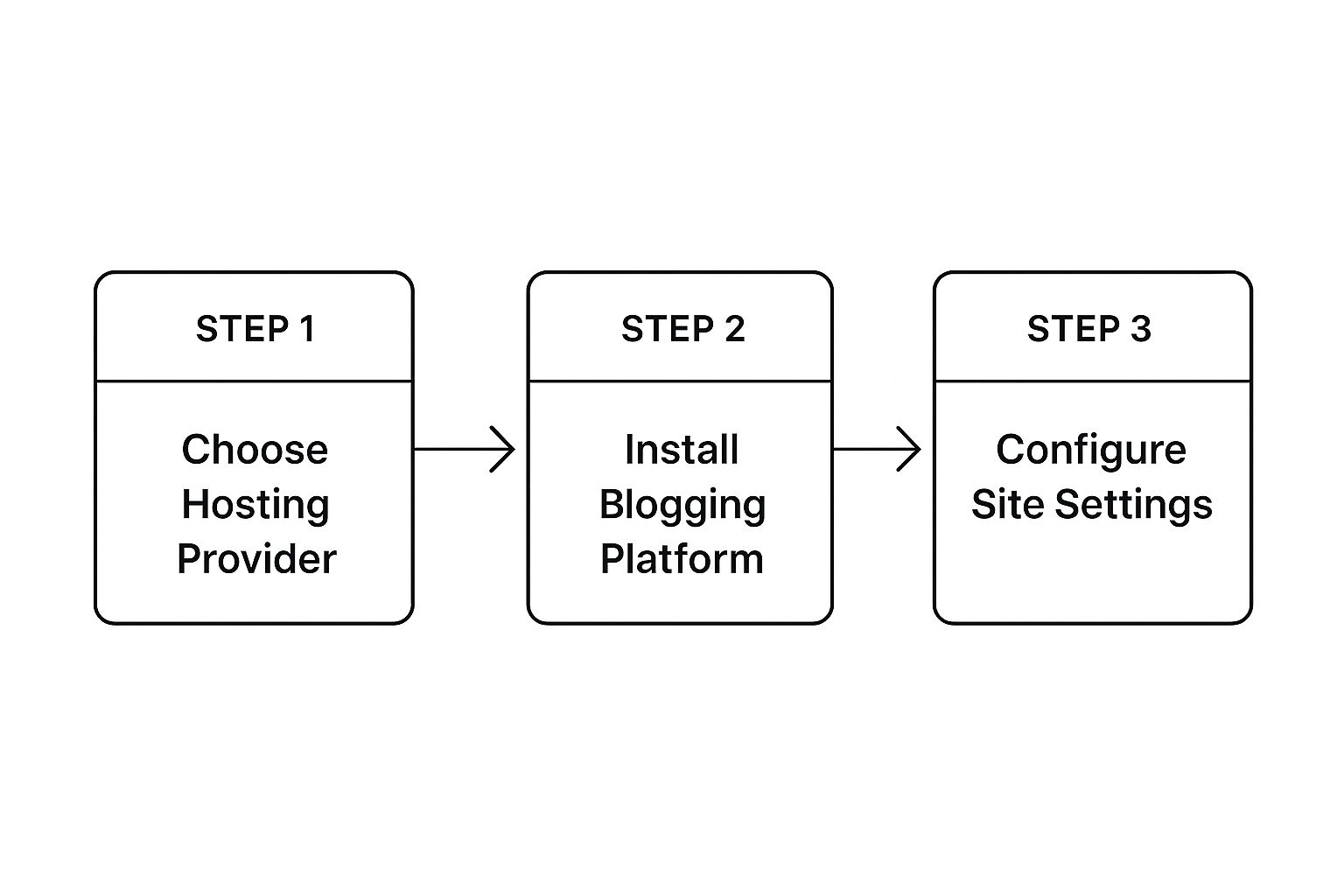
4.1 Choosing a Blogging Platform
Your platform is the engine of your website. While there are several options, one stands out for serious bloggers.
- WordPress.org (Recommended): This is the industry standard. It gives you 100% ownership, endless customization, and the freedom to monetize however you want. It requires a small investment in a domain and hosting, but it's essential for building a real business.
- Blogger: Free and easy to use, but very limited. You have less control over design and monetization, making it a poor choice for a professional blog.
- Medium & Other Platforms: Great for writing, but you don't own your audience. Building a consistent income stream is extremely challenging.
For anyone serious about making money blogging in India, self-hosted WordPress.org is the only choice.
4.2 Domain Name Selection
Your domain is your blog's address. It should be memorable, easy to spell, and relevant to your niche.
- Tips: Keep it short and simple. Avoid hyphens or numbers.
- .com vs .in: A
.indomain signals an Indian audience, but.comis globally recognized and often seen as more authoritative. For most, .com is the safer, more scalable choice. - Registrars: Use registrars like GoDaddy, BigRock, or Namecheap to find and buy your domain.
- Cost: Expect to pay ₹500 to ₹1,000 per year.
4.3 Web Hosting Selection
Hosting is the land where your blog is built. For beginners in India, affordability and reliable local support are key.
Hosting Provider Comparison for Indian Bloggers
| Provider | Starting Price (INR/mo) | Best For | Key Feature |
|---|---|---|---|
| Hostinger India | ~₹149 | Absolute beginners on a tight budget | Excellent value with a user-friendly interface. |
| Bluehost India | ~₹175 | New bloggers wanting an easy setup | Officially recommended by WordPress. |
| HostGator India | ~₹99 | Small blogs and personal projects | Offers flexible plans and decent support. |
| SiteGround | ~₹300 | Bloggers focused on performance | Known for exceptional speed and support. |
Key Factors: Look for servers located in India for faster loading speeds, 24/7 customer support, and a high uptime guarantee (99.9%).
4.4 WordPress Installation
Most hosting providers offer a simple, one-click WordPress installation. Just follow the on-screen instructions, and your basic blog will be live in minutes. After installation, configure basic settings like your site title, tagline, and permalink structure (set it to "Post name" for SEO).
4.5 Theme Selection & Customization
Your theme controls your blog's design.
- Free vs. Premium: Start with a free, lightweight theme like Astra, GeneratePress, or Kadence. They are fast, mobile-friendly, and easy to customize. Avoid bloated themes that slow down your site.
- Mobile Responsiveness: This is non-negotiable. Most of your readers will be on mobile, so your blog must look great on a small screen.
4.6 Essential Plugins
Plugins add functionality. Only install what you absolutely need.
- SEO: Rank Math or Yoast SEO.
- Security: Wordfence to protect your site.
- Backup: UpdraftPlus for automated backups.
- Speed: WP Rocket (paid but worth it) or W3 Total Cache.
- Analytics: Site Kit by Google to connect Google Analytics and Search Console.
4.7 Legal Requirements in India
Get your legal basics right from the start.
- Privacy Policy & Terms of Service: Every blog needs these pages. You can use free online generators to create them.
- GST Registration: You do not need a GST number to start. It only becomes mandatory when your annual revenue from services crosses the ₹20 lakh threshold.
- Copyright: Never copy content. Always create original material.
- Disclosure: Clearly disclose sponsored posts and affiliate links to maintain reader trust. This is a legal requirement in many places and a best practice everywhere.
Content Strategy for Indian Audience

Great content is the heart of a successful blog. But content that works for a global audience often fails to connect in India. To win, you must understand the unique mindset and habits of Indian readers.
Understanding Indian Readers
- Language Preferences: While English is widely used, there's a massive, underserved audience for content in Hindi and other regional languages.
- Content Consumption: A huge majority—likely over 80%—will read your blog on a mobile phone.
- Mobile-First Approach: This is non-negotiable. Use short paragraphs, clear headings, and lots of white space to make your content easy to scan on a small screen.
- Regional Considerations: India is diverse. A post about "winter fashion" in Delhi is irrelevant to someone in Chennai. Tailor your content to specific regions where applicable.
Content Planning
An editorial calendar is your roadmap. For an Indian blog, it needs a local flavor.
- Editorial Calendar: Plan your content at least a month in advance.
- Evergreen vs. Trending: Balance timeless "how-to" articles with posts on current trends.
- Festival & Seasonal Content: Plan content around major Indian festivals (Diwali, Holi), seasons (monsoon), and key events (Union Budget, IPL). This makes your blog incredibly timely and relevant.
- Local Events: Integrate local news and events to connect with your community.
Writing Style Tips
- Simple, Conversational Tone: Write like you're talking to a friend. Avoid jargon and complex language.
- Use Hinglish/Regional Words: Sprinkling in words like "chalo," "jugad," or "paisa vasool" can make your writing feel instantly more authentic and relatable.
- Cultural Sensitivity: Be mindful of India's diverse cultural and religious landscape.
- Examples from India: Use examples, case studies, and references that your Indian audience will immediately understand.
Content Types That Work
Some formats are exceptionally effective with Indian audiences because they solve specific problems.
- How-to Guides & Tutorials: "How to File ITR for the First Time."
- Listicles & Comparisons: "10 Best Smartphones Under ₹15,000" or "Zerodha vs. Groww."
- Product Reviews: Focus on products and services readily available and relevant in India.
- Success Stories & Interviews: Feature local entrepreneurs and experts.
- Infographics & Visual Content: Break down complex information into easy-to-digest visuals.
SEO for the Indian Market
- Target Local Keywords: Instead of "best restaurants," target "best biryani restaurants in Hyderabad."
- Google My Business: If your blog has a local business component, set up a GMB profile.
- Voice Search Optimization: Indians are increasingly using voice search. Optimize for conversational, question-based keywords.
- Featured Snippets: Structure your content with clear headings, lists, and tables to win the coveted "position zero" in Google search results.
Monetization Strategies for Indian Bloggers
This is where your hard work turns into income. The Indian market offers numerous monetization avenues beyond just slapping ads on your site. Let's explore the strategies that are working for Indian bloggers right now.
6.1 Google AdSense
For most new bloggers, AdSense is the first step.
- Eligibility: Your blog should be a few months old with 20-30 quality articles and essential pages (About, Contact, Privacy Policy).
- Application: The process is straightforward through the AdSense website.
- Earnings (RPM/CPM in India): Set realistic expectations. The RPM (Revenue Per 1,000 impressions) for Indian traffic is typically lower, ranging from ₹70 to ₹250 ($1-$3), depending on your niche.
- Optimization: Place ads strategically within your content, in the sidebar, and below post titles for better performance.
6.2 Affiliate Marketing
This is where you earn a commission for recommending products. For many top bloggers, this is their largest income source.
- Indian Affiliate Programs:
- Amazon Associates India & Flipkart Affiliate: Must-haves for almost any niche.
- Myntra, Ajio: Perfect for fashion and lifestyle blogs.
- Web Hosting (Hostinger, Bluehost): High commissions for tech and business blogs.
- Financial Products (Groww, Zerodha): Lucrative for finance niches.
- Best Practices: Only promote products you genuinely trust. Write honest, detailed reviews to build credibility. Always disclose your affiliate links.
6.3 Sponsored Content
Once you have consistent traffic (around 10,000+ monthly visitors), brands may pay you to feature their products.
- Approaching Brands: Create a simple one-page "Media Kit" with your blog stats (traffic, audience demographics) and contact info.
- Rate Card: Rates in India can range from ₹2,000 to over ₹50,000 per post, depending on your blog's authority and traffic.
- Guidelines: Always clearly label sponsored content as "Sponsored" or "Ad" to maintain reader trust.
6.4 Digital Products
This strategy offers the highest profit margin as you keep almost 100% of the revenue.
- E-books: Package your expertise into a downloadable guide. Topics like exam prep, regional recipes, or investment guides sell well. Price them affordably (₹99 to ₹999) for the Indian market.
- Online Courses: Teach a skill you've mastered. Platforms like Teachable or Graphy make it easy to create and sell courses. We have a guide on the best platforms to create and sell online courses.
- Templates & Resources: Sell resume templates, social media graphics, or study materials.
6.5 Services and Consulting
Your blog is the perfect portfolio to attract clients.
- Create a "Services" page offering:
- Content writing
- Digital marketing consultation
- One-on-one coaching
- Speaking engagements
This is a fantastic way to generate significant income, especially in the early stages. If this path interests you, explore our guide on how to start freelancing in India.
6.6 Alternative Monetization
- YouTube Integration: Create video versions of your blog posts.
- Podcast Sponsorships: Launch a podcast for your niche.
- Email Newsletter: Sell ad space or promote affiliate products to your subscribers.
- Membership Sites: Offer premium content for a recurring fee.
6.7 Payment Gateways and Tax
- Payment Gateways: Use Indian gateways like Razorpay, PayU, or Instamojo to easily accept payments for your products and services. They support UPI, cards, and net banking.
- GST Implications: Your blogging income is taxable. GST registration is only mandatory once your annual revenue from services crosses ₹20 lakhs.
- Income Tax: Report your blogging income under "Profits and Gains from Business or Profession." It's wise to consult a Chartered Accountant (CA) as your income grows.
Growing Your Blog Traffic

Publishing great content is only half the battle. Now you need to get it in front of the right readers. Here are practical strategies to grow your audience from zero, tailored for the Indian market.
7.1 Social Media Marketing
- Facebook: Join relevant Indian Facebook groups in your niche. Don't just spam your links; participate in discussions and share your posts when they add genuine value.
- Instagram: A must for visual niches (food, travel, fashion). Use Reels to create short, engaging video summaries of your blog posts. A 30-second Reel can drive significant traffic.
- Twitter/X: Use relevant hashtags and create informative threads that link back to your detailed blog post.
- LinkedIn: If you blog about professional topics (career, finance, marketing), this is a goldmine. Share your articles and connect with industry professionals.
7.2 WhatsApp Marketing
In India, WhatsApp is a direct line to your most loyal readers. Create a WhatsApp Broadcast List (not a group) and share an invite link on your blog. Use it to send new post notifications directly to their phones, bypassing social media algorithms.
7.3 Email Marketing
Your email list is your most valuable asset. You own it, and no algorithm can take it away.
- Start Building from Day 1: Use free tools like Mailchimp or Sendinblue (now Brevo).
- Offer a Freebie: Provide a simple checklist, template, or short e-book in exchange for an email address.
- Send Regular Newsletters: Keep your subscribers engaged with valuable content and updates.
7.4 Guest Posting
Write an article for another, more established blog in your niche. This is one of the fastest ways to build authority and tap into their audience. Find popular Indian blogs, study their content, and send a personalized pitch with unique article ideas. The backlink you get will also boost your SEO.
7.5 Community Building
Turn your readers into a loyal community.
- Create a Facebook Group or Telegram Channel: Build a dedicated space for your readers to connect with you and each other.
- Engage with Comments: Respond to every comment on your blog and social media posts. Make your readers feel heard and valued.
8 Common Mistakes to Avoid
Many new Indian bloggers make the same preventable mistakes. Steer clear of these pitfalls to fast-track your success.
- Choosing an Oversaturated Niche Without a Unique Angle: Don't just start a generic "tech blog." Find a specific sub-niche, like "budget gaming gadgets in India."
- Ignoring Mobile Optimization: Your blog must be flawless on mobile. If it's not, you're losing the majority of your audience.
- Inconsistent Publishing: Aim for a consistent schedule, whether it's once a week or twice a month. Consistency builds trust and traffic.
- Copying Content: Plagiarism will get your site penalized by Google and destroy your reputation. Always be original.
- Neglecting Local SEO: If your content has regional relevance, use city-specific keywords.
- Not Building an Email List from Day One: This is the single biggest mistake. Start collecting emails immediately.
- Focusing Only on AdSense: Diversify your income. AdSense should be one of many streams, not your only one.
- Ignoring Hindi/Regional Language Potential: The biggest growth in Indian internet users is coming from non-English speakers. This is a massive, underserved market.
- Not Networking: Connect with other Indian bloggers. Collaborate, learn from each other, and grow together.
9. Success Stories to Inspire You
Every successful blogger started with a single post. Here are a few examples from India that show what’s possible with dedication and a smart strategy.
9.1 ShoutMeLoud (Harsh Agrawal)
Harsh Agrawal is one of India's most famous professional bloggers. He started ShoutMeLoud to share his passion for technology and blogging. Today, it’s a massive resource for aspiring digital marketers.
- Journey: He quit his job to pursue blogging full-time.
- Income Streams: He earns through affiliate marketing, direct ads, selling his own digital products (e-books), and consulting.
- Key Lesson: Diversifying income streams is crucial for long-term stability and growth.
9.2 YourStory
Founded by Shradha Sharma, YourStory isn't a personal blog but a media empire that started as one. It focuses on telling the stories of Indian entrepreneurs and startups.
- Scaling: It grew from a simple blog into a massive media platform with a large team.
- Strategy: They focused on a very specific niche—the Indian startup ecosystem—and became the go-to source for it.
- Key Lesson: Deeply understanding and serving a niche audience can lead to incredible scale.
9.3 Regional Success Stories
Success isn't limited to English blogs. Many creators are building thriving businesses in regional languages. For instance, there are numerous Hindi tech blogs that review gadgets for a Tier-2 and Tier-3 audience, earning significant income through affiliate marketing and AdSense. Similarly, Tamil and Telugu food blogs have built massive followings on YouTube and their websites, monetizing through ads and brand collaborations for regional products. These stories prove that connecting with an audience in their native language is a powerful strategy.
10. Resources and Tools for Indian Bloggers
You don't have to build your blog alone. Here are some essential tools and resources to help you on your journey.
10.1 Essential Free Tools
- Canva: For creating stunning graphics for your blog and social media.
- Google Analytics: To track your website traffic and understand your audience.
- Google Search Console: To monitor your site's performance in Google search.
- Grammarly: To proofread your content and avoid embarrassing errors.
- Ubersuggest: A great free tool for basic keyword research.
10.2 Paid Tools Worth the Investment
- SEMrush or Ahrefs: Powerful all-in-one SEO tools for serious bloggers.
- Premium Themes (like GeneratePress Premium): Offer better support, speed, and customization options.
- Email Marketing Tools (like ConvertKit): Advanced features for growing and monetizing your email list.
- Social Media Schedulers (like Buffer or SocialPilot): To save time managing your social media presence.
10.3 Learning Resources
- Indian Blogging Communities: Join Facebook groups like "Indian Bloggers" to connect with peers.
- YouTube Channels: Follow channels that provide digital marketing tips tailored for India.
- Online Courses: Platforms like Udemy and Skillshare offer courses on blogging and SEO.
10.4 Support Communities
- Facebook Groups: Search for groups specific to your niche (e.g., "Indian Food Bloggers," "Indian Finance Bloggers").
- Telegram Channels: Many top bloggers run channels to share tips and updates.
- Local Meetups: Look for local WordPress or digital marketing meetups in your city to network in person.
11. Conclusion: Your Journey Starts Now
You've made it through the complete roadmap. You now have the knowledge to start a blog and make money in India. We've covered everything from finding a profitable niche and setting up your website to creating content that connects with an Indian audience and monetizing your traffic effectively.
Remember the key takeaways:
- Consistency is everything. Publishing high-quality content regularly is the secret to long-term success.
- Be patient. Building a profitable blog is a marathon, not a sprint. It takes time to build traffic and trust.
- Think long-term. Your blog is a business. Treat it like one.
The potential to build a source of income, create a personal brand, and achieve financial freedom through blogging in India is real and accessible. Every successful blogger you admire started exactly where you are now—with an idea and the courage to take the first step.
Your journey starts today. Don't wait for the perfect moment. Choose your niche, register your domain, and write that first post. We're excited to see what you create. Share your journey and successes with our community

Ayush Gupta is an entrepreneur and SEO consultant with over a decade of experience helping businesses grow. As the founder of Visibility Ventures, he combines technical expertise with practical financial knowledge to guide readers through credit cards, investments, and tax optimization. He holds certifications in Entrepreneurship and Business Laws from NUJS Kolkata and regularly advises companies on digital growth strategies.