


Peer-to-peer (P2P) lending is a growing option in India for freelancers seeking passive income. With returns between 8-12% annually, it outpaces traditional bank deposits offering just 3-4%. Platforms allow investments from as low as ₹1,000, making it easy to start. However, only RBI-registered platforms are authorised, ensuring compliance and risk management.
Here are five leading P2P platforms for freelancers:
- Lendbox: Start with ₹1,000; returns up to 36%; simple fee structure.
- i2iFunding: Low entry at ₹5,000; returns of 15-25%; tech-driven borrower assessment.
- IndiaP2P: ₹10,000 minimum; auto-invest tools; returns up to 24%.
- Faircent: ₹5,000 minimum; returns up to 36%; regulatory issues noted recently.
- Finzy: High entry at ₹50,000; stable returns of 8.98-21.50%; no upfront fees.
Quick Comparison
| Platform | Minimum Investment | Expected Returns | Fee Structure | RBI Registered |
|---|---|---|---|---|
| Lendbox | ₹1,000 | 10-36% | 2% + GST on disbursed | Yes |
| i2iFunding | ₹5,000 | 15-25% | 2.5% + GST on collections | Yes |
| IndiaP2P | ₹10,000 | 12-24% | 2% + GST on disbursed | Yes |
| Faircent | ₹5,000 | 12-36% | 2% + GST on successful loans | Yes |
| Finzy | ₹50,000 | 8.98-21.50% | 2% + GST on disbursed | Yes |
Tips for Safe P2P Lending
- Diversify: Spread investments across multiple loans.
- Start Small: Begin with minimum amounts to test platforms.
- Check Compliance: Ensure RBI registration.
- Monitor Returns: Regularly track repayments and defaults.
P2P lending offers freelancers a way to grow income, but risks like defaults and liquidity issues require careful planning. Always balance these investments with safer options.
Is 20% ROI on P2P Lending Too Good to Be True?
How to Choose a P2P Lending Platform
Selecting the right peer-to-peer (P2P) lending platform can make a big difference in securing good returns while protecting your investment. For freelancers aiming to grow their income, understanding what sets trustworthy platforms apart from riskier ones is essential.
RBI Registration and Compliance
Start by confirming that the platform is registered with the Reserve Bank of India (RBI) and adheres to its regulatory guidelines. This ensures that your funds are managed within a secure and legally compliant framework.
Expected Returns and Interest Rates
Interest rates and returns can differ significantly across platforms. While higher returns might seem tempting, they often come with increased risk. Check the platform’s historical performance data to assess its reliability. Be cautious of platforms offering unusually high returns, as they may cater to borrowers with lower credit scores, increasing the likelihood of defaults.
Fee Structure and Charges
Platforms often have varying fee structures, which may include registration fees, maintenance costs, or deductions from your earnings. It’s important to calculate the total cost of investing, including any recurring charges, to understand your net returns. Some platforms might offer temporary fee waivers during promotions, but make sure you’re aware of the long-term costs involved.
Risk Assessment and Borrower Grading
Look for platforms that use robust credit scoring systems to evaluate borrowers based on their financial history, income, and repayment capacity. Platforms that provide transparent borrower profiles and detailed risk assessments can help you make better-informed lending decisions.
Minimum Investment and Diversification
Opt for platforms that allow flexible investment amounts. Being able to invest smaller sums across multiple borrowers helps you spread your risk and diversify your portfolio. This strategy reduces the impact of any single loan default and provides a more balanced approach to investing.
Digital Tools and User Experience
A seamless digital experience can make managing your investments easier. Prioritise platforms with intuitive apps or websites that offer features like real-time tracking, automated reinvestment, and portfolio analytics. Responsive customer support is another plus.
Loan Recovery and Default Management
Understanding how a platform handles loan defaults is critical. Check their recovery processes, legal measures, and whether they collaborate with professional agencies or offer insurance to protect your investment. A strong recovery mechanism can minimise losses in case of borrower defaults.
Transparency and Reporting
Trustworthy platforms maintain transparency by providing detailed transaction histories, borrower payment updates, and performance metrics. Regular and clear communication about your investments builds confidence and helps you track your portfolio effectively.
Track Record and Team Expertise
The platform’s operational history and the credentials of its founding team can offer insights into its reliability. Platforms backed by experienced management or reputable financial institutions are generally more stable and better equipped to comply with regulations.
1. Lendbox
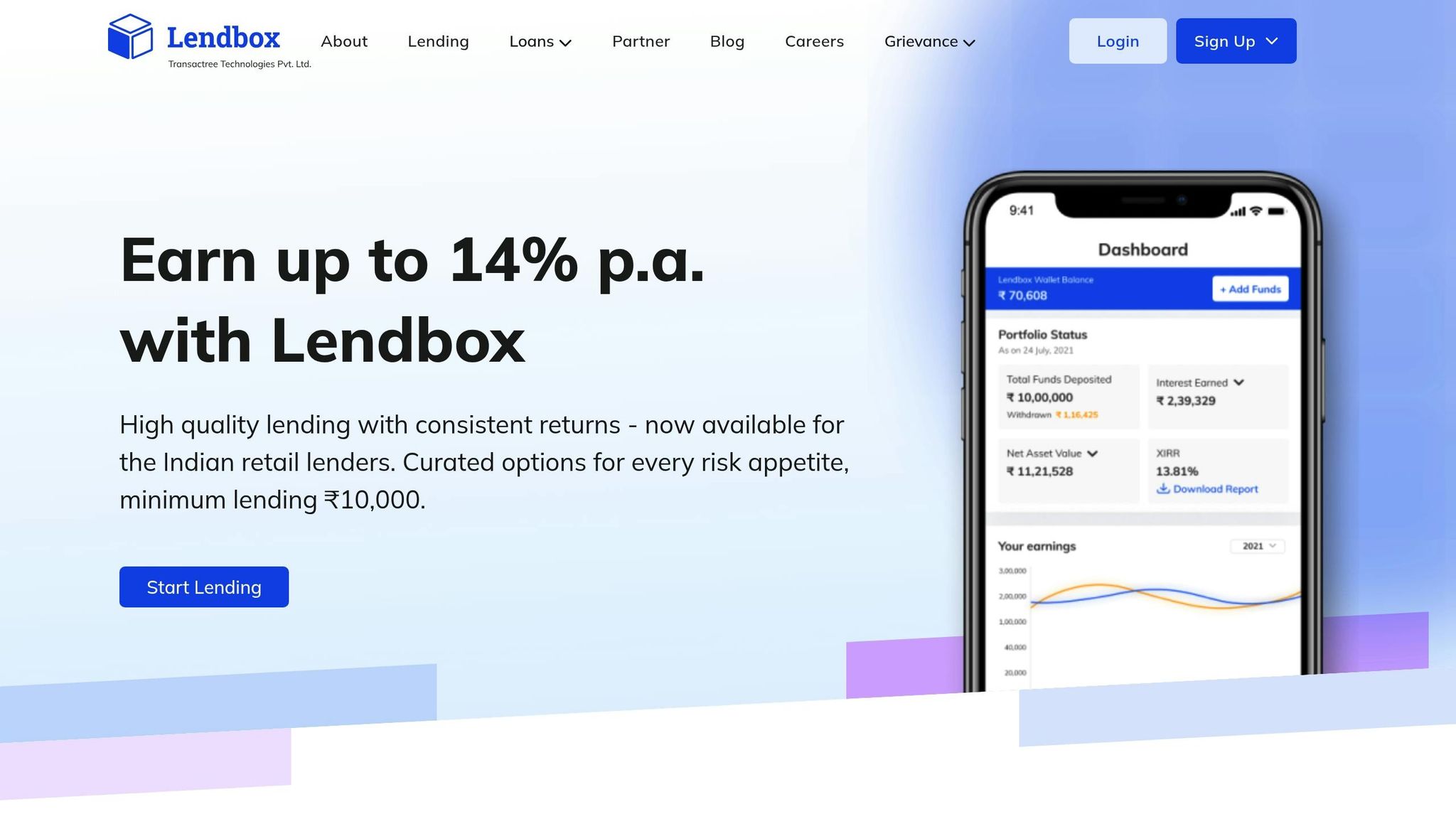
Let’s start with Lendbox, a standout platform in the peer-to-peer (P2P) lending space. Lendbox connects individual lenders with borrowers seeking personal loans, offering freelancers an opportunity to grow their income through lending.
Plus, it’s backed by the Reserve Bank of India (RBI), which ensures a secure and regulated environment.
RBI Registration and Compliance
As an RBI-registered platform, Lendbox adheres to the regulatory framework for NBFC-P2P lending platforms. It ensures proper fund segregation and operates transparently, giving lenders peace of mind while participating in the P2P lending ecosystem.
Annual Returns
Returns on Lendbox depend on the risk category of the borrower. By categorising borrowers into different risk grades, the platform allows you to balance potential returns with associated risks. Diversifying your lending portfolio can help smooth out returns over time.
Minimum Investment Amount
One of Lendbox’s key advantages is its low entry barrier. Freelancers can start with a small investment and spread it across multiple borrowers, which helps in managing risk while maximising potential returns.
Fee Structure
Lendbox keeps its fee structure straightforward. There’s a one-time registration fee, and a service fee is deducted from your returns – no hidden charges to worry about. For added convenience, the platform offers automated investment tools. These tools allow you to set custom lending preferences, making it ideal for freelancers with packed schedules.
2. i2iFunding
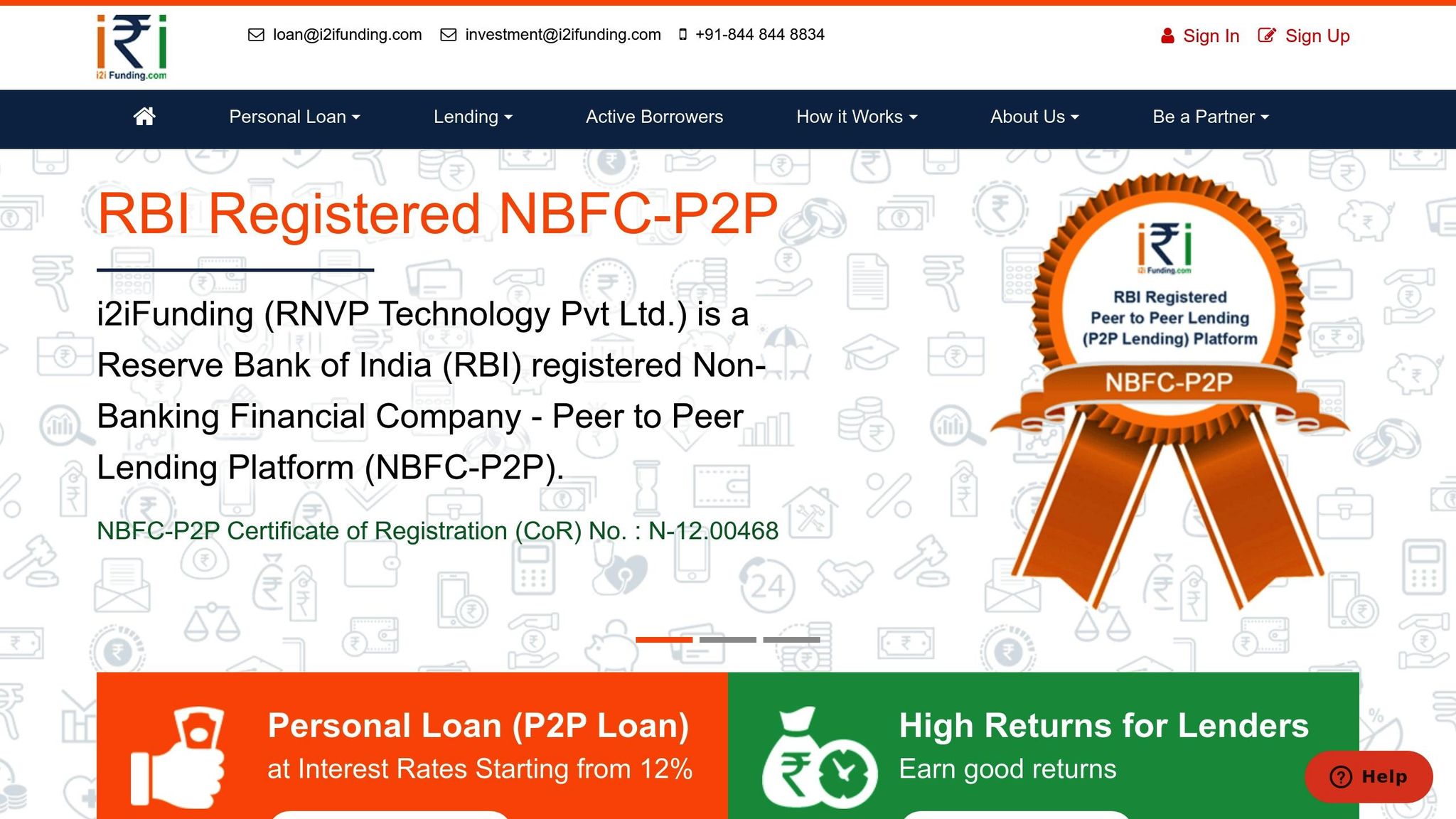
i2iFunding is another solid choice for freelancers looking to diversify their income through peer-to-peer (P2P) lending.
The platform connects lenders with borrowers seeking funds for personal or business purposes.
What makes i2iFunding stand out is its use of technology-driven risk evaluation to assess borrowers effectively.
RBI Registration and Compliance
As an RBI-registered NBFC P2P platform, i2iFunding operates under strict regulatory guidelines, ensuring a secure and transparent lending process.
The platform keeps lender and borrower funds separate and provides detailed compliance reports.
This regulatory oversight ensures freelancers can invest with confidence, knowing their funds are managed within a legally sound framework.
Expected Annual Returns
Returns on i2iFunding depend on the risk profile of the borrowers you choose to lend to.
Borrowers with higher risk typically offer better returns, while lower-risk borrowers provide more stable but moderate earnings.
The platform’s advanced risk assessment tools are designed to help you make informed choices about where to invest your money.
Minimum Investment Amount
For freelancers new to P2P lending, i2iFunding offers a low entry barrier. You can start with a small initial investment, making it easy to explore the platform without committing significant funds upfront.
Additionally, you can distribute your investment across multiple borrowers, which helps reduce risk by avoiding over-concentration in a single loan.
Fee Structure
i2iFunding prides itself on a clear and upfront fee structure, eliminating hidden charges.
The platform charges a registration fee and a service fee on your earnings. For added convenience, it offers automation features that let you set loan preferences, perfect for freelancers who want to invest without spending too much time managing individual loans.
3. IndiaP2P
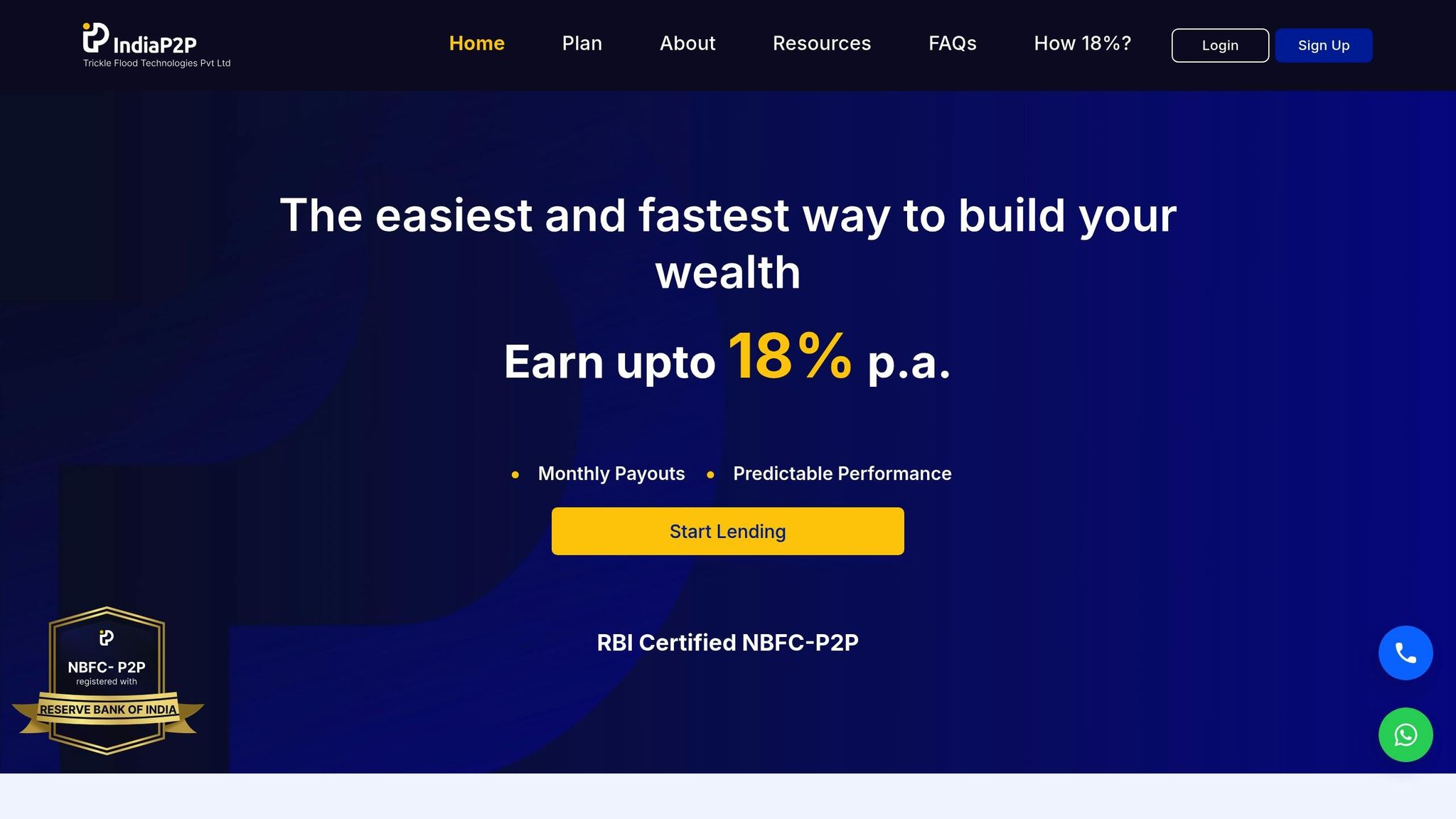
IndiaP2P is among the early movers in India’s peer-to-peer (P2P) lending space, offering freelancers an easy and straightforward way to earn passive income.
By connecting individual lenders with borrowers, the platform makes P2P investing accessible, even for those new to the concept.
Let’s take a closer look at its regulatory framework, returns, and investment structure.
Regulatory Compliance
IndiaP2P operates in line with the Reserve Bank of India’s (RBI) guidelines, ensuring that investor funds are managed securely and transparently.
These measures are aimed at protecting investor interests and maintaining trust.
Expected Returns
Returns on investments depend on the borrower’s creditworthiness and the terms of the loan.
To simplify the process for investors, IndiaP2P offers an auto-invest feature. This tool helps users spread their investments across multiple borrowers, aligning with their preferred level of risk while promoting diversification.
Investment and Fee Structure
Starting your P2P lending journey with IndiaP2P doesn’t require a hefty initial investment, making it an appealing choice for freelancers. The platform is upfront about its fee structure, ensuring users have a clear understanding of any costs involved and their potential net returns.
4. Faircent
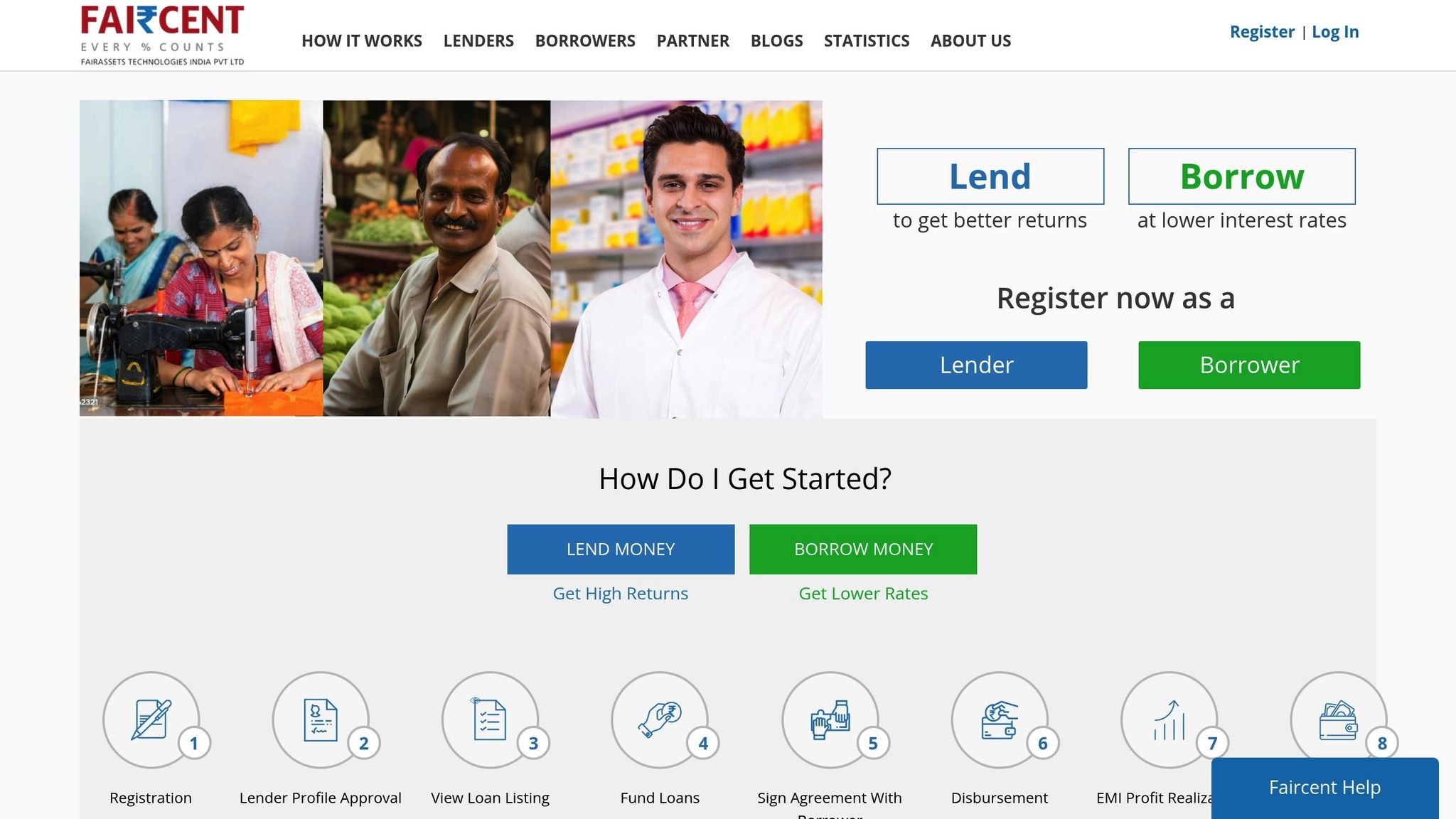
Faircent is one of the prominent platforms in India’s peer-to-peer (P2P) lending space, offering freelancers a chance to earn returns. However, recent regulatory developments suggest that investors should tread carefully.
RBI Registration and Compliance
Faircent operates as a Non-Banking Financial Company-Peer-to-Peer (NBFC-P2P) lender under the Reserve Bank of India’s (RBI) regulations.
In February 2025, the RBI imposed a penalty on Faircent for breaching NBFC-P2P guidelines, specifically for disbursing loans without the required authorisation. This incident underscores the importance of verifying a platform’s compliance with regulatory standards before investing.
Expected Annual Returns
Returns on Faircent depend on the borrower’s profile and the type of loan, with credit risks playing a significant role in determining profitability. Given the recent regulatory concerns, it’s crucial to assess how these might impact the platform’s risk management and, subsequently, its return structure.
Minimum Investment Amount
Faircent allows investors to start with relatively small sums, making it an accessible option for freelancers looking to dip their toes into P2P lending without committing significant capital upfront.
Fee Structure
Faircent applies processing and service fees, which can affect the overall returns. Freelancers should carefully examine the fee breakdown to understand its impact on their net earnings before proceeding with investments.
sbb-itb-98ad9c7
5. Finzy
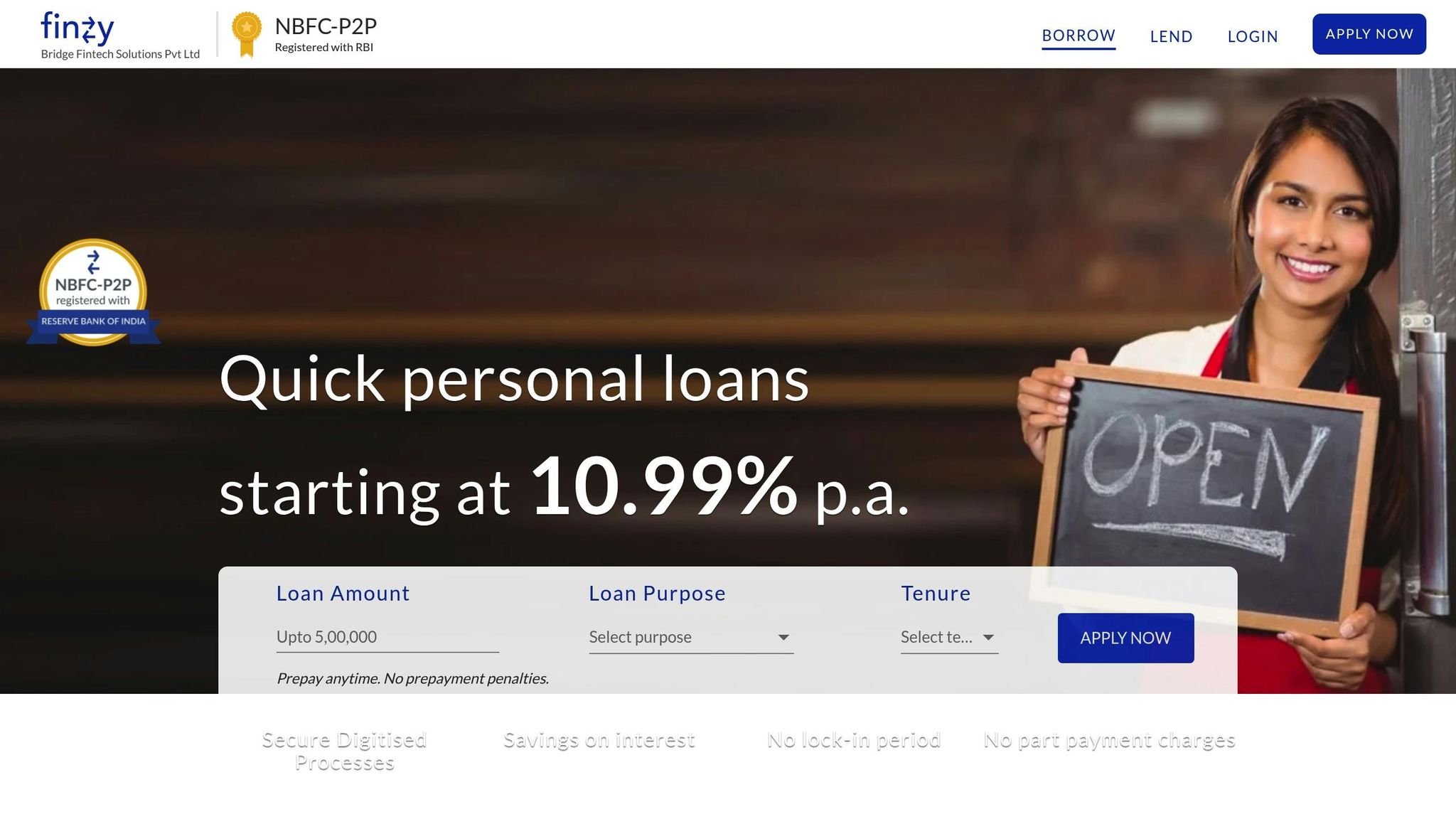
Finzy has carved a niche for itself in India’s peer-to-peer (P2P) lending market by setting a higher entry threshold, particularly appealing to freelancers ready to make a significant initial investment. Operating since 2017, the platform has built its reputation on strict adherence to regulatory standards.
RBI Registration and Compliance
As an RBI-registered NBFC-P2P platform, Finzy ensures it operates within the guidelines set by India’s central bank. This status offers freelancers peace of mind, knowing the platform maintains the necessary compliance standards and follows established lending regulations.
Expected Annual Returns
Since its inception in 2017, Finzy has consistently provided returns exceeding 10% annually. The platform offers a Lender ROI (Net IRR) ranging between 8.98% and 21.50%, giving investors the flexibility to choose options that match their risk tolerance and financial goals.
Minimum Investment Amount
To get started with Finzy, freelancers must make an initial investment of ₹50,000. Subsequent investments require a minimum of ₹5,000, in multiples of ₹1,000. This structure reflects the platform’s focus on attracting committed investors with the capacity to contribute significant capital.
Fee Structure
Finzy’s fee model is designed to align its interests with those of its lenders. The platform does not charge registration fees or lending fees upfront, minimising initial costs for investors. Instead, it applies a 2% fee plus GST on the funds disbursed to borrowers, ensuring Finzy earns only when the lenders do. This approach creates a win-win situation for both parties.
Platform Comparison Table
When selecting a P2P lending platform, having a side-by-side comparison of essential features can simplify the decision-making process. Below is a detailed table showcasing the key aspects of various platforms, tailored to help freelancers decide based on their investment capacity, risk tolerance, and return goals.
| Platform | Minimum Investment | Expected Returns | Registration Fee | Platform Fee | RBI Registration | Risk Grading | Primary Borrower Categories |
|---|---|---|---|---|---|---|---|
| Lendbox | ₹1,000 | 10% – 36% annually | Free | 2% + GST on disbursed amount | Yes (NBFC-P2P) | A1 to D3 scale | MSMEs, Salaried individuals |
| i2iFunding | ₹5,000 | 15% – 25% annually | Free | 2.5% + GST on collections | Yes (NBFC-P2P) | Grade-based system | MSMEs, Working professionals |
| IndiaP2P | ₹10,000 | 12% – 24% annually | Free | 2% + GST on disbursed funds | Yes (NBFC-P2P) | Risk-based grading | Small businesses, Individuals |
| Faircent | ₹5,000 | 12% – 36% annually | Free | 2% + GST on successful loans | Yes (NBFC-P2P) | Comprehensive scoring | MSMEs, Personal loans |
| Finzy | ₹50,000 (subsequent: ₹5,000) | 8.98% – 21.50% annually | Free | 2% + GST on disbursed amount | Yes (NBFC-P2P) | Internal risk assessment | Business loans, Working capital |
This table serves as a quick reference for comparing platforms, helping you zero in on the one that aligns with your financial objectives. Below are some key takeaways to guide your decision.
Key Observations for Freelancers
- Initial Investment Requirements: For those starting small, Lendbox stands out with its low minimum investment of ₹1,000. On the other hand, Finzy requires a much higher initial commitment of ₹50,000, making it more suitable for seasoned investors.
- Return Potential: If higher returns are your goal, Lendbox and Faircent offer opportunities with returns reaching up to 36%, though they come with higher risks. For those seeking lower-risk options, Finzy provides more moderate returns.
- Fee Structure: Across the board, platforms maintain a consistent fee range of 2-2.5% plus GST, with no upfront registration charges, ensuring transparency in costs.
- Regulatory Compliance: All platforms are registered with the RBI as NBFC-P2P entities, ensuring a standard level of regulatory oversight and security.
Your choice should reflect your financial priorities. Whether you’re looking for a low entry point, higher returns, or safer investment options, there’s a platform that fits your needs. For instance, Lendbox is ideal for beginners, while Finzy caters to those ready to invest larger amounts conservatively. Use these insights to align your decision with your financial strategy.
Risks, Taxes, and Tips for P2P Lending
To make the most of P2P lending, it’s essential to understand the risks and tax implications involved. While the returns can be appealing, the challenges – especially for freelancers with irregular income – demand a thoughtful and strategic approach.
Understanding the Key Risks
The biggest concern in P2P lending is default risk. Unlike fixed deposits or government-backed investments, there’s no certainty that borrowers will repay their loans. Defaults can happen due to reasons like business failures, job losses, or broader economic downturns, which means you could lose part or all of your invested money.
Another challenge is liquidity risk. Once your funds are invested, they’re locked until the loan matures. Unlike stocks or mutual funds, you can’t quickly liquidate your investment. If an emergency arises, you’ll either have to wait for scheduled repayments or pay penalties if the platform allows early exits.
There’s also platform risk to consider. Even though RBI registration provides some oversight, it doesn’t guarantee the platform’s long-term stability. Operational issues or technical failures on the platform could directly impact your investments.
Tax Implications You Need to Know
Interest earned from P2P lending is taxed as “income from other sources” under the Income Tax Act. This means the entire interest amount is added to your taxable income and taxed based on your income slab. Unfortunately, there are no special exemptions or deductions for P2P lending returns.
If your annual interest income from a single platform exceeds ₹5,000, TDS (Tax Deducted at Source) comes into play. The platform deducts 10% TDS and issues a certificate that you can use to claim the amount while filing your tax returns.
For freelancers in higher tax brackets, the taxation structure can significantly impact net returns. For instance, if you’re in the 30% tax bracket and earn a 20% return from P2P lending, your post-tax return reduces to about 14%. This makes tax planning a critical part of your investment strategy.
Essential Tips
Understanding these risks and tax implications is the first step to building a sound P2P investment strategy. Here are some practical tips to help you maximise returns while managing risks:
- Diversify your investments: Spread your money across 50–100 loans instead of concentrating on a few borrowers. This reduces the impact of individual defaults. A common rule is to allocate no more than 1–2% of your total portfolio to any single loan.
- Start small: Begin with the platform’s minimum investment requirement. Use this phase to understand how the platform operates and monitor your initial loan cycles closely. This low-risk approach allows you to learn without significant exposure.
- Match loan tenures with your cash flow: As a freelancer, your income can be unpredictable. Choose loan durations that align with your financial needs, and always keep an emergency fund separate from your P2P investments.
- Track repayments regularly: Most platforms offer dashboards to monitor repayment schedules and delays. Set up alerts for overdue payments and review your portfolio performance monthly. Identifying potential problems early can help you adjust your approach.
- Keep detailed tax records: Maintain records of all interest earned, TDS certificates, and platform fees. This will simplify tax filing and help you accurately calculate your post-tax returns.
- Limit P2P lending to a portion of your portfolio: Consider allocating only 5–10% of your total investments to P2P lending. Balance this with safer options like PPF, ELSS, or liquid funds to create a diversified financial plan that suits your income patterns.
- Choose borrowers wisely: Business loans often offer higher returns but come with greater risk. On the other hand, personal loans – especially from salaried borrowers – tend to have lower default rates, though the returns may be more modest.
Conclusion
RBI-registered P2P platforms are opening up new avenues for Indian freelancers to generate passive income. With annual returns ranging from 8% to 18%, they present an appealing alternative to traditional savings accounts and fixed deposits. The regulatory framework established by the RBI not only boosts investor confidence but also sets clear standards for operation and performance.
One of the key advantages of RBI oversight is the transparency it brings. Borrower screening processes are more robust, and investor protection measures have significantly improved compared to the pre-regulation era. These platforms are also beginner-friendly, allowing freelancers to start with relatively small investments – a practical option for those with irregular income. For example, spreading ₹1,00,000 across 20 different loans can limit the impact of a single default to just 5% of your portfolio, effectively managing risk.
However, success in P2P lending requires careful planning. Always confirm the platform’s RBI registration, thoroughly review its borrower screening processes, and check historical default rates. Starting with smaller investments, keeping a close eye on your portfolio, and ensuring you have funds set aside for emergencies can go a long way in reducing risks. While the returns are enticing, it’s important to remember that P2P lending comes with its own set of challenges, including borrower defaults and liquidity issues. To maintain financial stability, consider it as part of a broader, diversified investment plan.
FAQs
What should freelancers look for when selecting a P2P lending platform in India?
When selecting a P2P lending platform in India, freelancers should focus on trustworthiness and security. A platform with a solid reputation, backed by positive user feedback and consistent performance, can make all the difference.
Here’s what to keep an eye on:
- Risk management: Ensure the platform employs strategies like loan diversification and rigorous borrower credit checks to reduce potential risks.
- Transparency: Look for clear information about fee structures, interest rates, and borrower eligibility criteria.
- Regulatory adherence: Choose platforms that comply with RBI regulations to safeguard your investments.
By weighing these factors carefully, freelancers can make smarter choices, aiming for better returns while keeping risks under control.
Why does RBI registration make P2P lending platforms safer and more reliable?
The Reserve Bank of India (RBI) registration guarantees that peer-to-peer (P2P) lending platforms in India operate under strict regulatory standards. This ensures greater safety and reliability for both lenders and borrowers. Platforms registered as NBFC-P2Ps are required to comply with rules around transparency, borrower verification, and effective risk management.
RBI’s oversight includes regular audits and compliance checks, which help reduce the chances of fraud and safeguard investors’ interests. These measures create a secure and dependable ecosystem for P2P lending, encouraging trust and confidence among users.
What taxes apply to freelancers earning through P2P lending in India?
Taxation on P2P Lending in India
In India, any interest income you earn through P2P lending falls under the Income from Other Sources category. If you’re a freelancer, you’ll need to declare this income while filing your Income Tax Return (ITR). The tax you owe will depend on the income tax slab you’re in, with rates climbing as high as 30% for those in the higher brackets.
This type of income is classified as regular interest income, not capital gains, meaning it gets added to your total taxable income for the financial year. To stay compliant and ensure accurate reporting, it’s crucial to maintain detailed records of the interest you’ve earned.
Related posts
- How to Start a Passive Income to Offset Inflation in India
- When to hire a financial advisor vs. DIY investing
- Side Hustle Nation India: Monetizing Your Skills in the Gig Economy
- Top 10 Cashback Credit Cards in India 2025

Ayush Gupta is an entrepreneur and SEO consultant with over a decade of experience helping businesses grow. As the founder of Visibility Ventures, he combines technical expertise with practical financial knowledge to guide readers through credit cards, investments, and tax optimization. He holds certifications in Entrepreneurship and Business Laws from NUJS Kolkata and regularly advises companies on digital growth strategies.